
When sourcing industrial pipes internationally, coated steel pipes often account for a significant portion of a project’s budget and are critical to the service life and safe operation of the piping system. However, due to language barriers, differences in standards, and the complexity of the supply chain, many procurement managers and engineers are prone to falling into hidden “pitfalls” when purchasing from overseas suppliers.
This article summarizes seven common mistakes made when sourcing coated steel pipes overseas to help you avoid risks and ensure the efficient implementation of your project.
I. Focusing Only on Price While Neglecting Coating Quality
When purchasing personnel receive quotes, their first focus is often the price per metric ton, as they hope to find the supplier with the lowest quote. However, for coated steel pipes, price is only one factor in the purchasing decision; it is often the quality of the anti-corrosion coating that truly determines the service life of the pipeline.
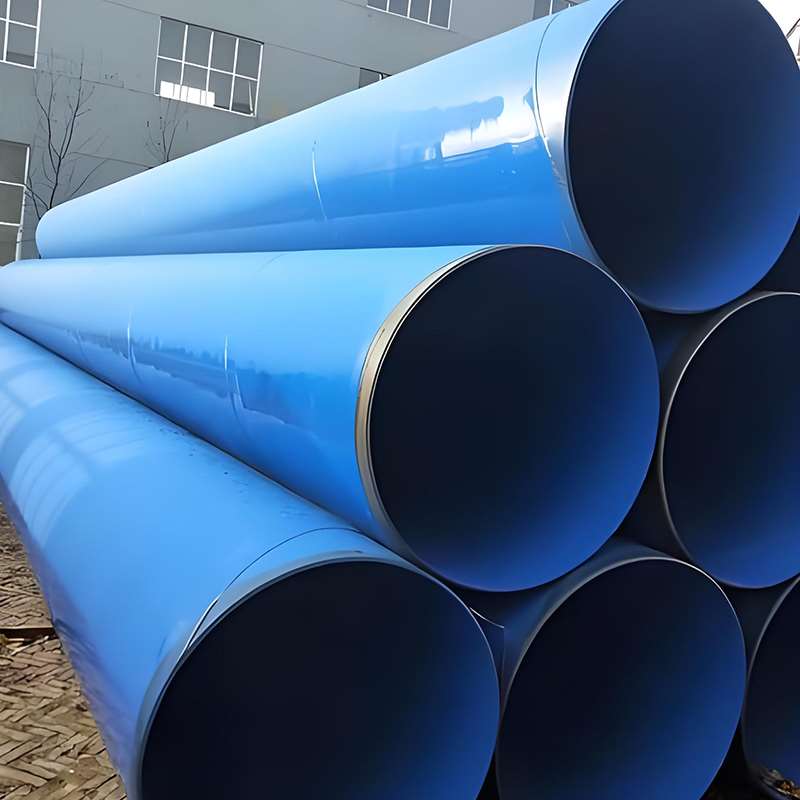
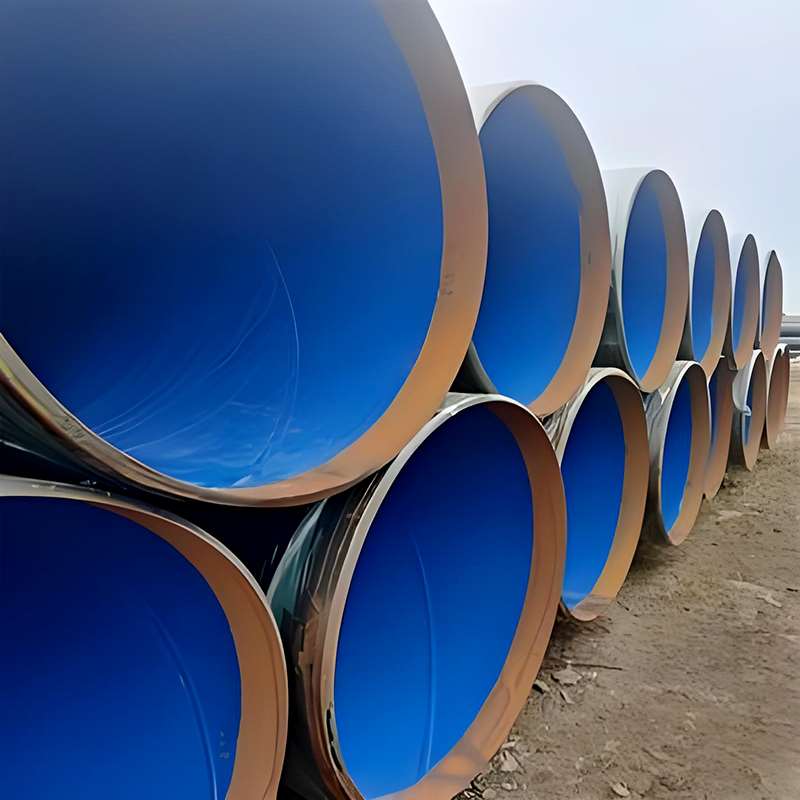
For example, even among steel pipes labeled as 3PE or FBE coated, there may be significant differences among manufacturers in terms of epoxy powder brand, polyethylene raw materials, adhesive performance, coating thickness, and application processes. To cut costs, some low-priced products may reduce coating thickness, use inferior raw materials, or simplify quality inspection procedures.
For water, natural gas, and oil transmission projects, as well as underground pipeline projects, these differences directly impact the pipeline’s corrosion resistance and service life.
Procurement Recommendations:
- Do not compare only the unit price; also compare coating thickness, adhesion, impact resistance, and cathodic剥离 performance.
- Require suppliers to provide complete coating test reports, not just a quotation.
- Comprehensively evaluate the product’s total life-cycle cost, rather than focusing solely on the procurement cost.
II. Lack of Specific Standards
Many procurement documents simply state “Epoxy-Coated Steel Pipe” or “3PE-Coated Pipe” without specifying the applicable standards.
In fact, the corrosion protection standards adopted vary by country and industry. For example:
- The ISO 21809 series is primarily used for oil and gas pipelines;
- DIN 30670 is widely used in Europe;
- CSA Z245.20 is primarily used in the Canadian market;
- AWWA standards are more commonly used for water supply and drainage projects;
- API 5L specifies the technical requirements for steel pipes used in transportation.
Even though they are all 3PE coatings, different standards may have significant differences in requirements for coating thickness, adhesion, impact resistance, electrical spark leak detection, and cathode stripping tests.
Procurement Recommendations:
Clearly specify the complete standards in contracts and technical specifications, for example:
- API 5L PSL2 + ISO 21809-1
- DIN 30670
- AWWA C210
- CSA Z245.20
At the same time, set forth explicit requirements for coating grades, thicknesses, and key performance indicators to avoid quality disputes arising from differing interpretations of the standards.
III. Failure to Consider Actual Operating Conditions Leads to the Selection of an Inappropriate Corrosion Protection System
Many procurement personnel simply tell suppliers they need “corrosion-resistant steel pipes” without providing specific operating conditions.
In fact, different environments require different corrosion protection solutions. For example, the requirements for coating materials vary significantly between ordinary water transmission pipelines, high-temperature steam pipelines, offshore engineering projects, chemical media, and extremely cold regions.
For example:
- Buried water transmission pipelines typically use FBE, 3PE, or epoxy lining;
- Marine engineering is better suited to 3LPE or 3LPP, which offer greater resistance to cathodic stripping.
- For the transport of high-temperature media, high-temperature-resistant 3LPP or special epoxy systems should be selected;
- In extremely cold regions, special attention must be paid to low-temperature impact performance to prevent coating brittleness and cracking.
If suppliers are unaware of the pipeline’s actual operating environment, the product may fail to meet long-term operational requirements even if it complies with standards.
Purchasing Recommendations:
When requesting a quote, please provide the following information whenever possible:
- Conveyed medium
- Operating pressure
- Operating temperature
- Installation environment (buried, overhead, underwater, etc.)
- Soil corrosion rating
- Whether the location is in a coastal or high-salinity area
The more detailed the operating conditions, the better equipped suppliers will be to recommend the most suitable corrosion protection solution.
IV. Neglecting Steel Pipe Surface Preparation and Weld Quality
Many procurement personnel focus on coating materials while overlooking steel pipe surface preparation—a critical factor that determines coating lifespan.
Whether for spiral-welded steel pipes (SSAW) or long-seam submerged-arc-welded steel pipes (LSAW), inadequate rust removal from the pipe surface or improper treatment of weld bead height will compromise coating adhesion and increase the risk of blistering, delamination, and corrosion later on.
Typically, prior to anti-corrosion application, the surface should meet the Sa 2.5 sandblasting standard, and the anchor pattern depth should be controlled appropriately to ensure the coating adheres firmly to the pipe surface.
Procurement Recommendations:
- Clearly specify the following requirements in the technical agreement:
- The surface blast cleaning grade must reach Sa 2.5;
- The anchor pattern depth must meet project requirements;
- Weld bead excess must be properly ground down or tapered;
- Surface cleaning and quality inspections must be completed prior to coating application.
Excellent surface preparation often enhances corrosion protection more effectively than simply increasing coating thickness.
V. Neglecting Third-Party Inspection and Quality Verification
Some procurement personnel rely solely on the factory inspection reports (MTC) provided by suppliers without arranging for third-party quality supervision.
For international projects, if it is only discovered after the products arrive at the construction site that the coating thickness is insufficient, the spark test fails, or the adhesion does not meet requirements, not only will the cost of rework be high, but it may also lead to delays in the entire project.
Therefore, third-party inspection should be conducted throughout the entire production process, rather than being arranged on an ad hoc basis only after production is complete.
Procurement Recommendations:
Based on project requirements, internationally recognized third-party inspection agencies such as SGS, BV, TÜV, and Intertek can be commissioned to conduct on-site witness inspections for the following items:
- Raw material inspection
- Hydrostatic pressure testing
- Coating thickness measurement (DFT)
- Electrical spark leak detection (Holiday Test)
- Adhesion testing
- Dimensional and visual inspection
Arranging third-party inspections in advance can help mitigate risks associated with international procurement.
VI. Neglecting Transportation, Packaging, and Pipe End Protection
Many people believe that as long as a product passes factory inspection, it can be shipped without concern; in reality, however, a large number of coating damages occur during transportation and loading/unloading.
During ocean transport, steel pipes typically undergo multiple cycles of lifting, stacking, and transshipment. If packaging is improper, the pipes may collide with one another, easily causing the coating to become scratched, cracked, or even partially peeled off.
In addition, pipe ends are particularly vulnerable to damage. Failure to retain the required weld stubs or install protective caps not only affects on-site welding but may also lead to pipe end corrosion and groove damage.
Procurement Recommendations:
The following items should be confirmed prior to shipment:
- Use nylon slings for lifting to avoid direct contact between steel wire ropes and the coating;
- Insert rubber washers or wooden spacers between pipes;
- Install plastic end caps;
- Specify the dimensions of the weld stubs and the bevel angles;
- Develop a reasonable packaging and securing plan based on the mode of transportation.
- Proper packaging measures can minimize quality losses caused during transportation.
VII. Failure to Evaluate Suppliers’ Comprehensive Capabilities
Many procurement projects use price as the sole evaluation criterion, while neglecting the supplier’s overall capabilities.
A truly reliable supplier not only manufactures products in accordance with standards but also possesses a comprehensive quality management system, proven export experience, and professional technical support capabilities.
Particularly for large-scale international projects, factors such as whether the supplier is familiar with international standards, supports third-party inspections, and can promptly provide complete technical documentation will directly impact project execution efficiency.
Procurement Recommendations:
Before selecting a partner, focus on evaluating the following aspects:
- Whether the supplier has a complete production line for steel pipes and anti-corrosion coatings;
- Whether the supplier has the capacity to produce large-diameter steel pipes;
- Whether the supplier is familiar with international standards such as API, ISO, EN, and AWWA;
- Whether the supplier can provide complete quality documentation and export materials;
- Whether the supplier supports third-party inspections and factory audits;
- Whether the supplier can provide technical consulting and after-sales support.
Choosing an experienced coated steel pipe manufacturer not only ensures you receive products that meet standards but also means having a reliable partner in areas such as technical selection, quality control, production management, and international logistics, thereby effectively reducing the risks associated with the entire procurement project.