
FBE Coated Spiral Steel Pipe
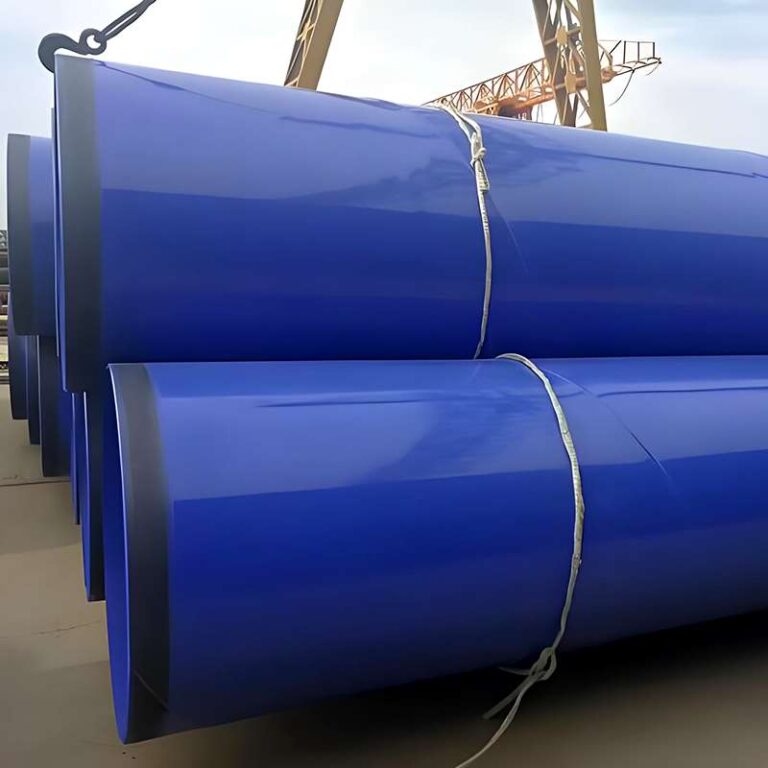
I. What Is an FBE-Coated Spiral Steel Pipe?
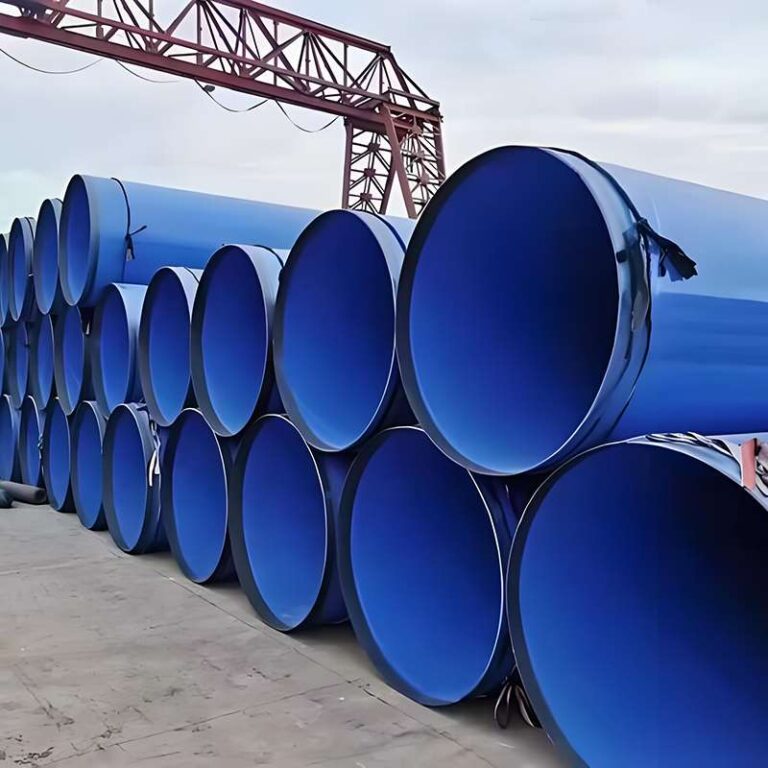
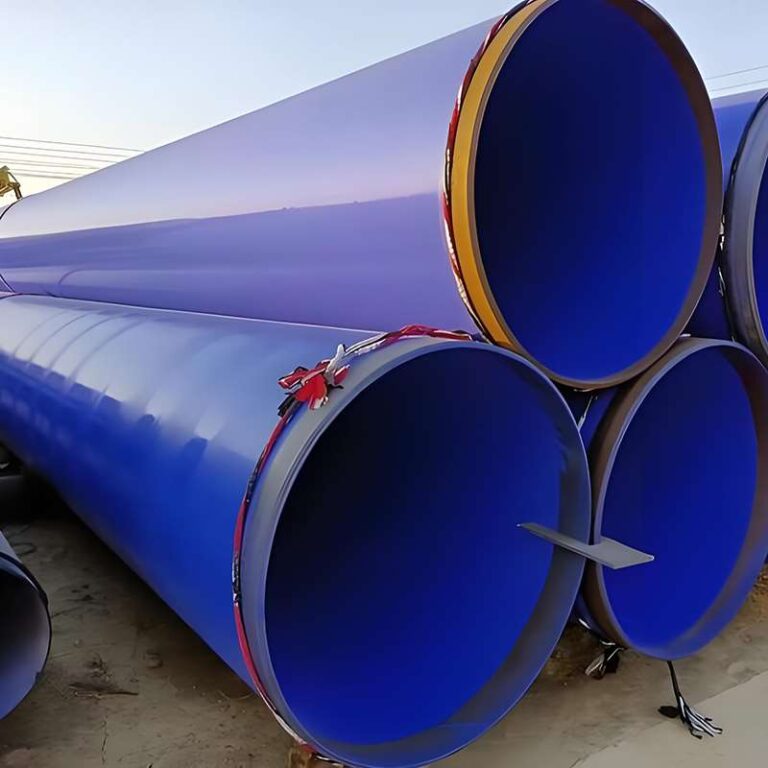
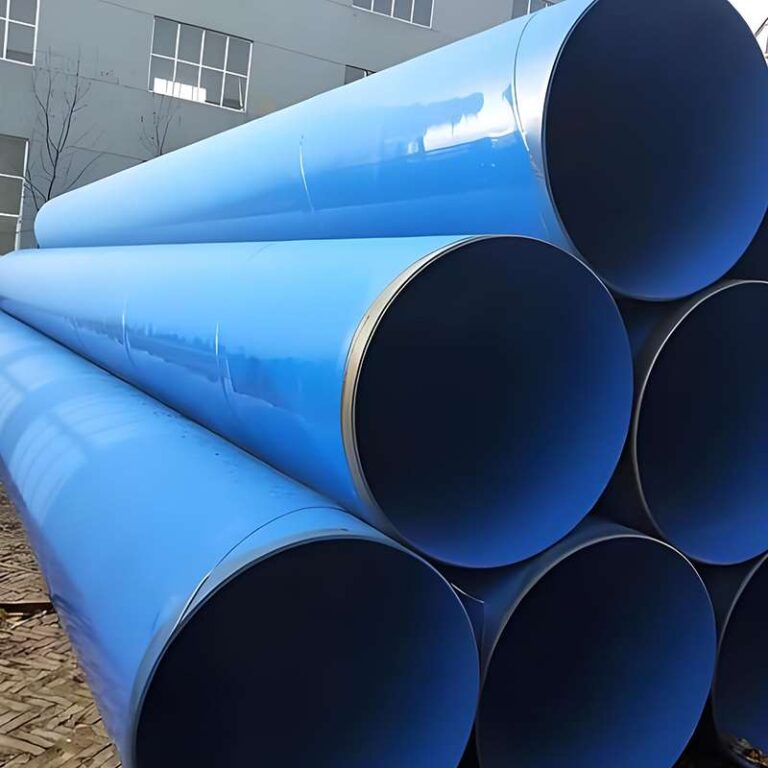
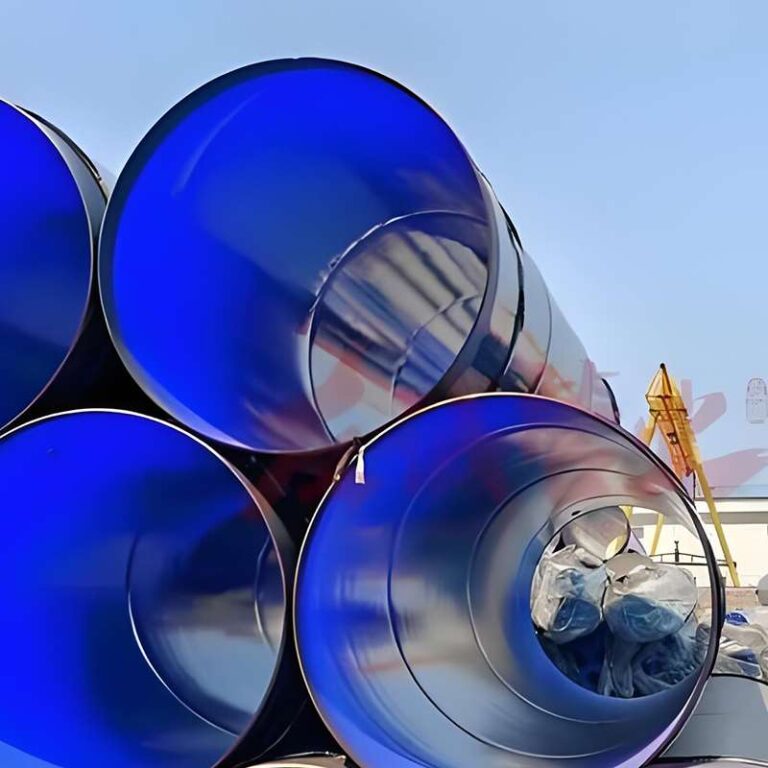
An FBE-coated spiral steel pipe is a high-performance pipeline product manufactured by applying a Fusion Bonded Epoxy (FBE) coating onto a base SSAW (Spiral Submerged Arc Welded) steel pipe.
It combines the structural strength of spiral welded steel pipes with the superior corrosion resistance of FBE coating, making it an ideal solution for demanding pipeline systems.
This type of pipe is widely used in municipal water supply systems, oil and gas transportation, chemical industries, and underground pipeline networks where long-term durability and corrosion protection are critical.
1. Introduction to FBE Coating
FBE (Fusion Bonded Epoxy) is a thermosetting powder coating widely used for corrosion protection of steel pipes.
Its primary component is epoxy resin powder, which melts and cures under high temperature to form a continuous, protective film.
Key features of FBE coating include:
- Excellent adhesion to the steel substrate
- High density and uniform coverage
- Superior corrosion resistance
Formation Principle of FBE Coating
FBE coating is not simply “applied” to the pipe surface; it is formed through a high-temperature fusion process.
The typical process involves:
- Surface Preparation: The steel pipe is grit-blasted to achieve an Sa2.5 cleanliness and roughness standard.
- Pipe Preheating: The steel pipe is heated to the specified temperature.
- Electrostatic Powder Spraying: Epoxy powder is evenly applied to the preheated pipe surface.
- Fusion and Curing: The powder melts under heat and undergoes a chemical cross-linking reaction, forming a solid protective layer.
The result is a corrosion-resistant coating that is:
- Continuous
- Dense
- Strongly bonded to the steel substrate
This ensures long-term durability and reliable protection for pipelines in demanding environments.
2. Introduction to Spiral Steel Pipes
SSAW (Spiral Submerged Arc Welded) steel pipes are manufactured by continuously rolling steel strips into a spiral shape.
Main Manufacturing Process
The key steps include:
- Uncoiling and Leveling: Steel strips are uncoiled and flattened to ensure uniform thickness.
- Spiral Forming: The steel strip is formed into a helical shape.
- Internal and External Submerged Arc Welding: Both the inner and outer seams are welded under submerged arc conditions.
- Weld Inspection: Welds are inspected using ultrasonic and radiographic testing.
- Sizing and Straightening: Pipes are brought to precise diameter and straightness specifications.
- Cutting and Hydrostatic Testing: Pipes are cut to length and pressure-tested to ensure integrity.
Key Features
- Capable of producing large-diameter pipes
- Relatively cost-effective compared to other pipe types
- Uniform strength, suitable for long-distance transportation
Common Material Grades
Q235B
- Standard carbon structural steel
- Low cost and widely used
- Suitable for low-pressure water pipelines and general structural applications
Q355B
- Low-alloy, high-strength steel
- Higher strength than Q235B
- Ideal for engineering pipelines under higher pressure conditions
API 5L Gr.B
- American Petroleum Institute (API) standard pipeline steel grade
- Used for oil and natural gas transportation
- Offers good toughness and excellent weldability
X42, X52, etc.
- Upgraded series of API 5L line pipe steels
- Higher “X” values indicate higher strength
- Commonly used in medium- to high-pressure long-distance pipeline systems
II. Why FBE-Coated Steel Pipes Are Preferred for Water Supply and Wastewater Projects
1. Excellent Corrosion Resistance
The FBE (Fusion Bonded Epoxy) coating forms a dense, waterproof, and tightly bonded protective layer on the steel pipe surface.
This barrier effectively prevents soil moisture, chemicals, and microorganisms from corroding the pipe.
Compared with conventional coatings, FBE ensures long-term durability in underground and harsh environments.
2. High Strength and Suitability for Long-Distance Transportation
Spiral welded steel pipes inherently offer high strength and uniform mechanical properties.
When combined with FBE coating, the pipes maintain structural integrity while withstanding internal water pressure and external soil loads.
This makes them ideal for long-distance municipal water supply and wastewater transportation networks.
3. Ease of Installation and Maintenance
FBE-coated steel pipes are moderately weighted with a smooth surface, facilitating rapid jointing and welding during installation.
The coating’s strong adhesion prevents peeling during operation, reducing the need for repeated corrosion protection in maintenance cycles.
4. Cost-Effectiveness and Sustainability
Although the initial cost of FBE-coated pipes is slightly higher than standard steel pipes, their extended service life, low maintenance requirements, and high reliability result in lower total project costs over the pipeline’s lifecycle.
Additionally, the FBE coating is environmentally friendly, solvent-free, and poses no risk to water quality, aligning with modern sustainable engineering standards.
III. Common Standards for FBE Coated Spiral Steel Pipes
| Standard System | Standard Number | Standard Name | Application Scope |
|---|---|---|---|
| API (American Petroleum Institute) | API 5L | Specification for Line Pipe | Oil and natural gas transmission pipelines |
| ASTM (American Society for Testing and Materials) | ASTM A139 / A252 | Standard Specification for Electric-Fusion (Arc)-Welded Steel Pipe | Water supply, wastewater, and general engineering pipelines |
| ISO (International Organization for Standardization) | ISO 3183 | Petroleum and Natural Gas Industries — Steel Pipe for Pipeline Transportation Systems | Oil, gas, and chemical pipelines |
| EN (European Standard) | EN 10217-1 / EN 10217-2 | Welded Steel Tubes for Pressure Purposes | Municipal water supply and pressure pipeline systems |
| DIN (German Standard) | DIN 2448 / DIN 2458 | Seamless and Welded Steel Tubes | Industrial pipelines and water transportation systems |
| GB/T (China National Standard) | GB/T 9711 | Steel Pipe for Pipeline Transportation Systems | Oil, gas, and industrial fluid transportation |
IV. How to Select the Right FBE-Coated Spiral Steel Pipe
1. Define Your Project Application First
The first step is to clearly identify the engineering application, as different scenarios require different pipe specifications.
Municipal Water Supply
- Key requirement: water quality safety + long-term corrosion resistance
- Recommended solution: FBE coating + Q235B / Q355B steel grade
Sewage / Industrial Wastewater Pipelines
- Key requirement: resistance to chemical corrosion
- Recommended solution: high-adhesion FBE coating (reinforced coating system can be considered)
Oil & Gas Transmission
- Key requirement: high strength + high safety rating
- Recommended solution: API 5L Gr.B / X42 / X52 + FBE coating
2. Select Steel Grade Based on Pressure Class
Pipe strength must match the operating pressure of the system.
Low-pressure systems (general water supply)
- Q235B (cost-effective and widely used)
Medium-pressure systems (municipal / industrial applications)
- Q355B (higher strength and improved safety performance)
High-pressure or long-distance transmission systems
- API 5L Gr.B / X42 / X52
3. Choose the Appropriate Corrosion Protection Level
The performance of FBE coating should be matched with the service environment.
Normal soil conditions
- Standard FBE coating is sufficient
High humidity / high salinity / coastal environments
- Recommended: high-grade or reinforced FBE coating
Highly corrosive soil / wastewater environments
- Recommended: high-adhesion FBE with excellent cathodic disbondment resistance
4. Confirm Applicable Standards
Common international standards include:
- API 5L (Oil & Gas pipelines)
- ISO 3183 (International standard for pipeline systems)
- ASTM A139 / A252 (Municipal and structural applications)
- EN 10217 (European pressure pipe standards)
5. Ensure Reliable Coating Manufacturing Process
A high-quality FBE coating must meet the following requirements:
- Surface preparation: grit blasting to Sa2.5 standard
- Uniform electrostatic powder application
- Complete high-temperature fusion bonding
- Free of pinholes and air bubbles
Common quality issues to avoid:
- Coating thickness too thin → premature failure
- Poor surface preparation → coating delamination
- Low-quality epoxy powder → reduced service life
V. Procurement of FBE-Coated Spiral Steel Pipes
Q1: What is the difference between FBE-coated spiral steel pipes and conventional anti-corrosion steel pipes?
A: The key difference lies in the corrosion protection mechanism and service life.
FBE (Fusion Bonded Epoxy) coating is formed through a high-temperature fusion process, creating a chemically bonded protective layer. In contrast, conventional anti-corrosion coatings are typically paint-based systems that rely on physical adhesion.
Advantages of FBE coating:
- Stronger adhesion, less likely to peel or delaminate
- More stable and durable corrosion resistance
- Better suited for buried pipelines and long-term service conditions
Conventional paint coatings are generally suitable for short-term use or low-corrosion environments, while FBE is widely used in municipal engineering and long-distance pipeline systems.
Q2: What types of projects are FBE-coated steel pipes suitable for?
A: They are primarily used in pipeline systems requiring high corrosion resistance.
Typical applications include:
- Municipal water supply networks
- Wastewater treatment and discharge systems
- Oil and gas transmission pipelines
- Industrial circulating water systems
- Underground pipeline installations
They are especially suitable for humid environments, corrosive soils, and long-term buried applications.
Q3: How should the steel grade be selected during procurement?
A: Selection should be based on pressure class and project requirements.
- Q235B: Low-pressure water supply and general engineering applications
- Q355B: Medium-pressure municipal and industrial projects
- API 5L Gr.B: General standard for oil and gas pipelines
- X42 / X52: Medium- to high-pressure long-distance transmission pipelines
Selection principle: Higher pressure requires higher steel grade.
Q4: Is a thicker FBE coating better?
A: No. The coating must comply with standard thickness requirements.
FBE coating is strictly controlled during production, typically within a specified range (e.g., 300–500 μm depending on standards).
Excessive thickness may cause:
- Increased internal stress
- Reduced adhesion performance
- Higher risk of cracking
The key is not “thicker is better,” but uniformity, compliance, and defect-free application.
Q5: How can the quality of FBE-coated steel pipes be evaluated?
A: Focus on three critical inspection indicators:
- Surface preparation: Must reach Sa2.5 blast cleaning standard
- Coating quality: Uniform coverage, free of pinholes and air bubbles
- Adhesion performance: Must pass peel strength testing
High-quality products should demonstrate:
- Strong adhesion
- Excellent cathodic disbondment resistance
- Long-term stable corrosion protection performance
Q6: What is the typical service life of FBE-anti-corrosion spiral steel pipe?
A: Generally 20–50 years, depending on environmental conditions.
Key factors affecting service life include:
- Soil corrosivity
- Mechanical damage during installation or operation
- Coating grade and construction quality
- Whether cathodic protection systems are applied
Under standard installation and normal operating conditions, FBE-coated pipelines can achieve long-term stable performance with relatively low maintenance costs.