
In modern industrial and municipal infrastructure systems, buried water, oil, and gas pipelines serve as the “underground lifelines” of a city. However, these pipelines are constantly exposed to complex underground electrochemical soil conditions and, in numerous instances, corrosive transported media. Without adequate protection, they are highly susceptible to corrosion-related failures, including perforation and leakage, which can result in significant economic losses and even serious safety incidents.
The key to maximizing pipeline service life lies in selecting the right anti-corrosion coating system for the operating environment. In this article, we provide an in-depth analysis of the most widely used anti-corrosion coating technologies for steel pipelines and explore how partnering with a high-standard anti-corrosion spiral steel pipe manufacturer can help ensure long-term project reliability, operational safety, and reduced lifecycle costs.
I. In-Depth Analysis of Anti-Corrosion Steel Pipe Coating Systems
Different engineering environments impose varying requirements in terms of corrosion resistance, mechanical strength, and temperature tolerance. At present, the following four coating systems are the most widely adopted in both international and domestic pipeline engineering applications:
1. 3PE Anti-Corrosion Coating (Three-Layer Polyethylene System)
The 3PE anti-corrosion coating is one of the most widely recognized protection systems for long-distance pipelines worldwide. It consists of a three-layer composite structure:
- Bottom Layer (Fusion Bonded Epoxy, FBE):
Provides excellent adhesion to the steel substrate and outstanding resistance to cathodic disbondment. - Middle Layer (Adhesive Layer, AD):
Acts as a bonding bridge, ensuring strong integration between the epoxy layer and the outer polyethylene layer. - Outer Layer (High-Density Polyethylene, HDPE):
Serves as a tough protective shell, offering resistance to soil stress, mechanical impact, and plant root penetration.
Application Scope:
Long-distance oil and natural gas transmission pipelines, as well as urban gas trunk networks. The designed service life typically exceeds 50 years.
2. TPEP Anti-Corrosion Coating System
TPEP (External 3PE + Internal Fusion Bonded Epoxy Powder) is a high-performance coating system specifically developed for water transmission projects.
- External Surface:
Uses standard 3PE coating to effectively resist external soil corrosion. - Internal Surface:
Coated with fusion-bonded epoxy (FBE), forming an ultra-smooth, mirror-like interior surface with extremely low absolute roughness. This significantly reduces scaling and bacterial growth inside the pipe while effectively lowering flow resistance and energy consumption. The internal coating fully complies with potable water hygiene and safety standards.
Application Scope:
Inter-basin water diversion projects, municipal water supply trunk networks, fire-fighting systems, and reclaimed water transmission pipelines.
3. FBE Anti-Corrosion Coating (Single-Layer / Dual-Layer Fusion Bonded Epoxy)
FBE is an environmentally friendly thermosetting coating applied by electrostatic spraying onto preheated steel pipes, where it cures to form a continuous protective film. Dual-layer FBE adds another topcoat to enhance resistance to mechanical damage compared to the single-layer system.
Characteristics:
It offers excellent resistance to electrochemical corrosion and high-temperature performance. However, compared with 3PE systems, the outer layer is relatively thinner, resulting in slightly lower resistance to mechanical impact.
Application Scope:
Subsea pipelines, pipe jacking sections, or as a composite base layer in 3PE coating systems.
4. Coal Tar Epoxy Anti-Corrosion Coating
Coal tar epoxy is a traditional anti-corrosion system composed of epoxy resin, coal tar pitch, and anti-rust pigments. It is typically applied on-site using glass cloth reinforcement, commonly in configurations such as “three cloth and five coats” or “five cloth and seven coats”.
Characteristics:
It offers high electrical insulation resistance and strong resistance to microbial corrosion, with relatively low material cost. However, it has a long application cycle and poorer environmental performance due to the presence of volatile toxic substances.
Application Scope:
Conventional drainage pipelines with limited budget and low environmental requirements, or temporary pipeline installations.
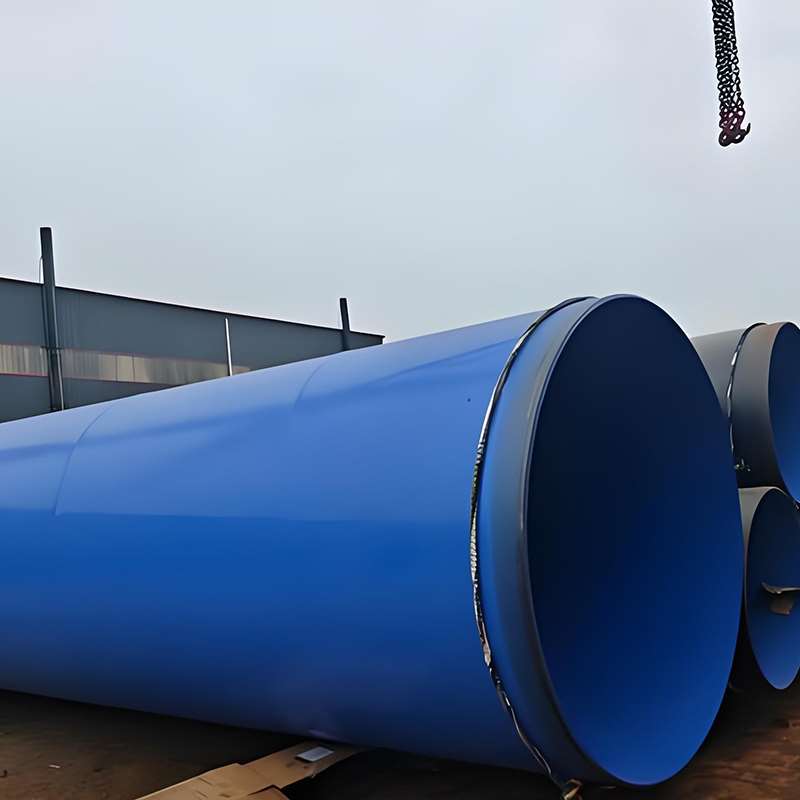
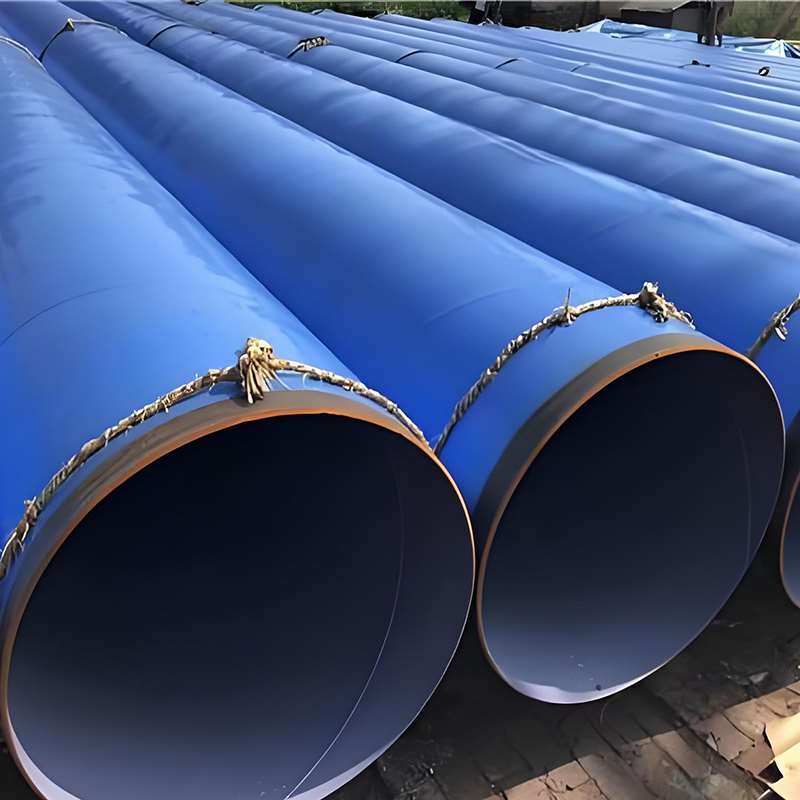
II. Why Are “Spiral Welded Steel Pipes” Often Chosen as Base Pipes for Corrosion Protection Projects?
Once the coating system is understood, corrosion protection technology often relies on an excellent geometric substrate. Among the many types of pipes available, spiral welded steel pipes (SSAW) are frequently selected as the preferred base pipe for medium- and large-diameter corrosion-resistant pipelines due to their unique physical properties:
- Superior Structural Strength: The welds in spiral welded steel pipes are arranged in a spiral pattern. When the pipe is under internal pressure, the combined stress on the welds is significantly lower than that in straight-seam pipes, resulting in higher burst resistance.
- Flexibility in Sizing: Spiral welded steel pipes can be produced in various diameters from steel strips of the same width. This is particularly advantageous in large-diameter (DN500 and above) water and gas transmission projects, where it significantly reduces material processing costs.
- Better Coating Adhesion: After undergoing a shot blasting rust removal process, the surface of spiral welded steel pipes develops uniform microscopic roughness (anchor pattern depth), allowing 3PE or TPEP coatings to bond more securely to the steel surface.
III. How to Evaluate and Select a High-Quality Anti-Corrosion Spiral Steel Pipe Manufacturer
High-performance anti-corrosion coating is a complex engineering system involving thermodynamics, fluid mechanics, and materials science. As pipelines are typically buried as concealed works, any quality defect discovered after installation can lead to excavation and repair costs that are several times higher than the initial procurement cost.
Therefore, selecting a technically capable and well-equipped anti-corrosion spiral steel pipe manufacturer must be based on a strict evaluation of the following four key dimensions:
1. Raw Material Control and Certification
Reputable manufacturers strictly prohibit the use of substandard steel strips at the pipe-forming stage. Instead, they cooperate with major steel groups to ensure that chemical composition and mechanical properties fully comply with required standards.
For anti-corrosion powders and polyethylene (PE) granules, only internationally or domestically recognized first-tier brands are used to ensure coating performance stability.
In addition, a qualified manufacturer should hold complete certifications, including:
- Special Equipment Manufacturing License (TS Certification)
- ISO Quality Management System Certification
- Drinking Water Hygiene and Safety Approval (mandatory for potable water pipeline projects)
2. Automated Production Equipment and Precise Temperature Control
Temperature control is the core factor in anti-corrosion coating performance. For example, in the 3PE coating process, the steel pipe heating temperature must be precisely controlled within 200°C–220°C.
- If the temperature is too low, the epoxy powder cannot fully cure.
- If the temperature is too high, the epoxy resin may degrade due to thermal aging.
Professional anti-corrosion spiral steel pipe manufacturers are typically equipped with fully automated medium-frequency induction heating systems and online infrared temperature monitoring devices, significantly reducing human error and ensuring process stability.
3. Strict Online and Offline Quality Inspection System
A truly reliable manufacturer must operate a non-negotiable quality inspection system, including:
- Surface Preparation Standard:
Steel surface must reach the Sa 2.5 level, meaning no visible oil, grease, dust, mill scale, or rust remains. - Holiday (Pinhole) Detection:
100% online inspection using electrostatic spark testers. For 3PE coatings, testing voltage typically exceeds 25 kV, ensuring zero pinholes and zero coating defects. - Peel Strength Testing:
Regular coating adhesion tests are conducted to verify that the PE layer is firmly bonded to the steel substrate, ensuring long-term coating integrity.
4. On-Site Technical Support and Project Service Capability
From factory delivery to field installation, anti-corrosion steel pipes undergo multiple handling stages, including loading, transportation, and lifting. Any improper handling can compromise coating integrity.
High-quality manufacturers typically provide:
- Professional pipe-end protective caps to prevent coating damage during transportation
- Experienced technical engineers on-site to guide installation
- Supervision of field joint coating (e.g., heat shrink sleeve application and proper heating process)
These measures ensure the continuity and integrity of the entire pipeline anti-corrosion system from factory to final installation.