
In long-distance, high-pressure oil and gas transmission projects, the selection of pipeline materials directly determines the operational safety, service life, economic efficiency, and environmental security of the entire pipeline system. Among various pipe specifications, anti-corrosion spiral submerged arc welded (SSAW) steel pipes have become a dominant choice for oil and gas transmission pipelines due to their unique manufacturing process and superior structural performance.
From an engineering and technical perspective, this article analyzes why anti-corrosion SSAW steel pipes offer irreplaceable advantages in oil and gas pipeline systems, and how they effectively address key engineering challenges in real-world applications.
I. Core Performance Comparison Between SSAW and LSAW Steel Pipes
To better understand the technical advantages of spiral submerged arc welded (SSAW) pipes in oil and gas pipeline applications, we provide a systematic comparison with traditional longitudinal submerged arc welded (LSAW) pipes in terms of manufacturing process, stress distribution, and field installation performance.
| Comparison Dimension | Spiral Submerged Arc Welded Pipe (SSAW) | Longitudinal Submerged Arc Welded Pipe (LSAW) |
|---|---|---|
| Size adaptability | High. The same steel strip width can be used, and various diameters can be flexibly and continuously produced by adjusting the forming angle. | Low. Pipe diameter is strictly limited by the width of steel plates, and changing specifications requires expensive mold replacement and results in long production cycles. |
| Weld stress condition | Excellent. The weld seam is at an angle to the pipe axis, so the principal stress direction is offset, and the combined stress on the weld is much lower than that of a straight seam. | General. The weld runs perpendicular to the maximum hoop stress, and the internal pressure stress at the weld reaches its peak. |
| Crack resistance | The spiral weld geometry effectively prevents cracks from propagating along the axial direction and avoids catastrophic fracture. | Once cracking occurs due to accidental impact, cracks tend to propagate longitudinally along the straight weld for a long distance. |
| Pipe end geometric accuracy | Modern forming and sizing technology ensures consistent roundness at pipe ends, enabling fast alignment during field installation of long-distance pipelines. | Overall precision is relatively high, but residual stress release at plate edges may cause local geometric deformation. |
| Overall manufacturing economy | Continuous production using hot-rolled coils with high material utilization, offering significant cost advantages in large-diameter pipeline procurement. | Produced from individual heavy steel plates with complex processes; unit production and equipment depreciation costs are higher than SSAW pipes. |
II. Modern Anti-Corrosion Technology: The Core of Extending Oil and Gas Pipeline Service Life
Oil and natural gas often contain hydrogen sulfide (H₂S), carbon dioxide (CO₂), and moisture. In addition, pipelines are typically buried underground, where they are exposed to complex electrochemical corrosion caused by soil conditions. Without a high-performance anti-corrosion coating system, no steel pipe can maintain long-term stability in such harsh environments.
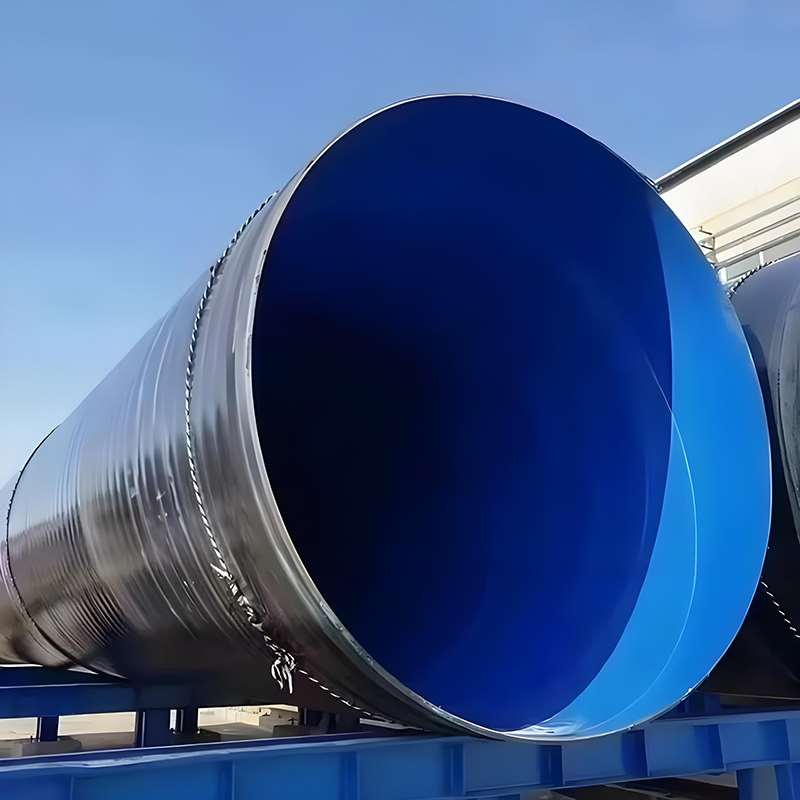
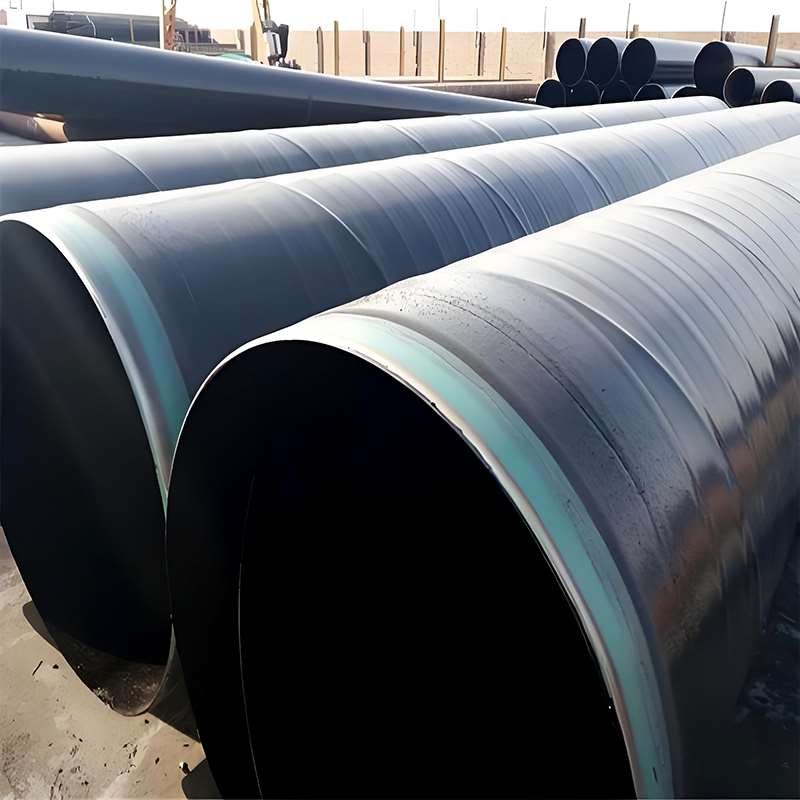
Modern engineering technology addresses this challenge by applying high-performance anti-corrosion coatings on the surface of spiral steel pipes, upgrading them into anti-corrosion SSAW steel pipes suitable for demanding oil and gas transmission applications.
| Corrosion Position | Typical Coating Structure | Core Engineering Function and Benefits |
|---|---|---|
| External corrosion protection (3PE as an example) | Bottom layer: Fusion Bonded Epoxy (FBE) | Provides resistance to electrochemical corrosion and forms a strong molecular-level bond with the steel substrate. |
| External corrosion protection (3PE as an example) | Intermediate layer: Adhesive layer | Acts as a bonding bridge between the inner epoxy layer and the outer polyethylene layer, preventing delamination and moisture ingress. |
| External corrosion protection (3PE as an example) | Outer layer: High-Density Polyethylene (HDPE) | Provides mechanical damage resistance, electrical insulation, and waterproofing, protecting against soil pressure and mechanical impact. |
| Internal corrosion protection | Anti-drag corrosion coating (liquid epoxy resin) | Prevents internal wall rusting during storage and transportation; reduces internal surface roughness, lowering flow resistance and increasing transmission efficiency by approximately 5%–10%. Long-term operation also reduces compressor energy consumption costs. |
III. Engineering Applications in Practice
In real-world procurement and construction projects, the selection of anti-corrosion SSAW steel pipes is typically based on the following key performance advantages:
High cost-efficiency material selection
Due to the use of hot-rolled steel coils as raw material and continuous manufacturing processes, production efficiency is significantly improved. For large-diameter long-distance transmission pipelines (typically Φ508 mm – Φ1422 mm), this approach can substantially reduce bulk material procurement costs.
High-precision field assembly
Excellent pipe-end roundness ensures low misalignment during on-site alignment in long-distance pipeline construction. This not only improves the welding quality of girth welds but also significantly accelerates overall installation efficiency.
Engineering recommendations
In actual oil and gas pipeline design and material selection, it is recommended to strictly comply with the API 5L standard (e.g., grades X52, X60, X70). According to different geological conditions (such as swamp areas, high-salinity soils, or rocky backfill zones), appropriate external anti-corrosion inspection methods should be applied—such as spark testing and peel strength testing—to ensure that this cost-effective pipe solution can achieve a service life of 30–50 years under long-term operation.