
In underground pipeline projects, steel pipes are most vulnerable to rust and corrosion. Once an underground pipeline leaks, not only are repair costs exorbitantly high, but it can also lead to water and gas outages and even serious safety accidents. For project procurement, design, and construction teams, choosing a “worry-free, durable, and cost-effective” anti-corrosion solution is crucial to avoiding countless “maintenance pitfalls” later on.
I. What Is 3PE Coating?
3PE coating, also known as Three-Layer Polyethylene Anti-Corrosion Coating, is not simply a single type of paint or plastic coating. Instead, it is a powerful protective system formed by combining three different materials together under a hot-melt process to create a highly durable corrosion barrier.
We can clearly understand the structure of these three protective layers through the following explanation:
1. The First Layer: Fusion Bonded Epoxy (FBE) Powder
This layer is in direct contact with the steel pipe surface. It has excellent adhesion properties and outstanding resistance to chemical corrosion. Its main function is to prevent corrosive substances from penetrating and to firmly bond with the steel surface, providing the first line of protection.
2. The Second Layer: Copolymer Adhesive
This is the “bonding layer.” Since the first layer of epoxy powder and the third layer of polyethylene have different chemical properties, they cannot bond effectively when directly combined. The copolymer adhesive layer acts as a transition bridge, firmly bonding the inner and outer layers together to prevent delamination.
3. The Third Layer: Polyethylene (PE)
This is the outer “protective shell.” Polyethylene provides excellent waterproof and moisture-resistant performance, along with high mechanical strength. During pipe transportation, backfilling, and long-term underground operation, it can effectively withstand impacts and abrasion caused by hard sand, stones, and surrounding soil.
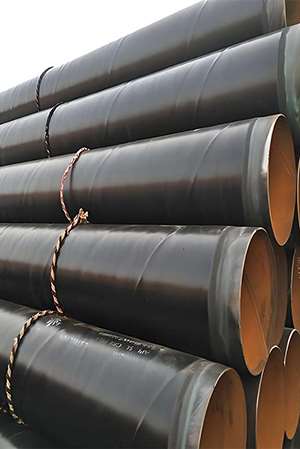
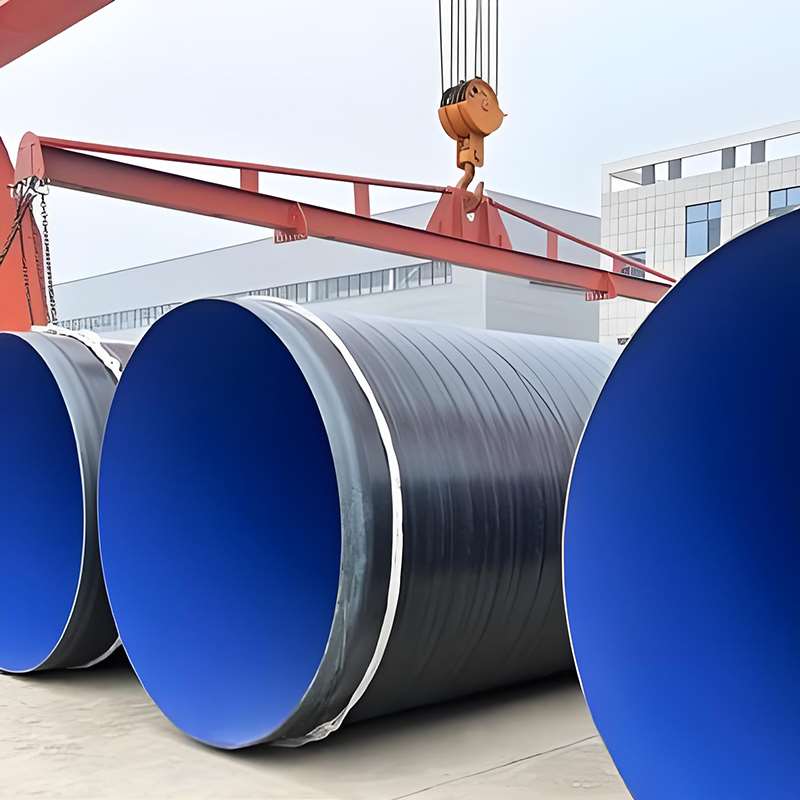
II. Why Choose “3PE Coated Spiral Steel Pipe” for Large-Diameter Pipeline Transportation?
In long-distance, large-diameter water supply or gas transmission projects, anti-corrosion spiral welded steel pipes are commonly selected as the preferred pipeline material. However, spiral welded steel pipes have a long spiral-shaped weld seam, which creates significant challenges during the anti-corrosion coating process:
- The weld seam is higher than the surface of the steel pipe. If the coating thickness is uneven, the anti-corrosion layer at the weld area can become thinner and more vulnerable.
- During transportation and installation, the raised weld seam area is more likely to suffer impact damage from external forces, which may cause coating peeling or damage.
To solve this challenge, 3PE coated spiral steel pipes adopt a special process known as the “pipe rotation and polyethylene film extrusion wrapping” method. Under high-temperature melting conditions, polyethylene behaves like plastic wrap, tightly wrapping around the pipe layer by layer while being compressed and bonded firmly.
This process allows the anti-corrosion coating to closely follow the raised weld seam, eliminating coating gaps and dead zones, and ensuring uniform corrosion protection across the entire weld area.
III. How Long Can 3PE Coating Last?
Although the designed service life of 3PE coating can reach 50 years under ideal conditions, the actual service life of a pipeline is not fixed or guaranteed. It depends not only on the coating material itself but also directly on the following three key factors:
1. Severity of the Soil Environment
The corrosiveness of underground soil varies significantly from one region to another. If a pipeline is buried in low-resistivity soil, highly saline and alkaline areas, or continuously damp underground environments, corrosive substances and stray currents in the soil can increase significantly.
These conditions place higher demands on the coating’s resistance and become major external risk factors that may eventually lead to corrosion and pipe perforation.
2. Quality of Steel Pipe Surface Preparation
There is a common saying in the industry: “30% depends on the material, and 70% depends on surface preparation.” The quality of steel pipe surface treatment directly determines the success of the 3PE anti-corrosion system.
Before coating application, the steel pipe must undergo strict sandblasting and rust removal to achieve the required surface cleanliness level. If rust, oil, moisture, or salt residues remain on the steel surface, they will seriously affect the molecular bonding between the fusion bonded epoxy powder and the steel substrate.
Even if high-quality coating materials are used afterward, poor surface preparation can still lead to coating blistering, peeling, or even large-area coating failure during long-term operation.
3. The Application Process of the Coating System
3PE anti-corrosion protection is far more than simply “wrapping a layer of plastic around a steel pipe.” It is a complex and systematic engineering process.
During factory production, it is essential to precisely control the curing temperature of the epoxy powder, the thickness of each of the three anti-corrosion layers, the bonding performance of the adhesive layer, and the extrusion quality of the polyethylene outer layer.
Finally, the finished coating must undergo strict holiday detection (pinholes inspection) and spark testing to ensure coating integrity.
Any mistake, negligence, or cost-cutting measure during any stage of the process can become a potential starting point for future pipeline corrosion and leakage failures.
IV. What issues should be considered when purchasing 3PE steel pipes?
Many purchasing personnel often only focus on the price of steel pipes when making purchases, but the true cost of anti-corrosion pipelines should be considered comprehensively throughout their entire service life. To ensure project quality, it is recommended to pay close attention to the following points when selecting 3PE steel pipes:
(1) Confirm the quality of the steel pipe substrate
The anti-corrosion layer protects the steel pipe body; therefore, the material and manufacturing quality of the steel pipe itself are equally important. During procurement, the following needs to be confirmed:
- Steel grade and chemical composition
- Mechanical properties
- Wall thickness tolerance
- Weld quality
(2) Confirm 3PE Anti-corrosion Coating Parameters
Different engineering projects have different requirements, so simply writing “3PE anti-corrosion” in the procurement contract or technical agreement is insufficient. You need to specify the following parameters:
- Anti-corrosion grade (e.g., ordinary or reinforced)
- Total coating thickness
- Epoxy powder layer thickness
- Polyethylene layer thickness
- Applied testing standards
(3) Check the anti-corrosion test report
Reliable manufacturers can usually provide complete and authentic quality certification documents. Please be sure to check and verify the following reports:
- Coating thickness test record
- Electrical spark leak test report
- Adhesion test (peel strength) record
- Visual inspection record
- Steel pipe material certificate
These documents can effectively help the project team accurately determine whether the product meets the specific technical requirements of the project.