
In the oil and gas, water supply, chemical, and municipal engineering industries, steel pipe corrosion has long been one of the most important factors affecting the safe operation of pipeline systems.
When selecting anti-corrosion steel pipes, many buyers often face the same question:
Which offers better corrosion protection, 3PE or FBE? Which one is more suitable for my project?
In fact, there is no absolute answer to this question.
Both 3PE and FBE are internationally recognized and widely used steel pipe anti-corrosion technologies. However, they differ significantly in their protection mechanisms, coating structures, application environments, and construction requirements.
The right choice is not simply about deciding “which one is better,” but rather about selecting the most suitable anti-corrosion solution based on:
- Pipeline operating environment
- Transported medium
- Design service life requirements
- Construction conditions
- Project cost
Choose the anti-corrosion solution that best meets your project’s requirements.
I. What Are 3PE and FBE?
FBE (Fusion Bonded Epoxy):
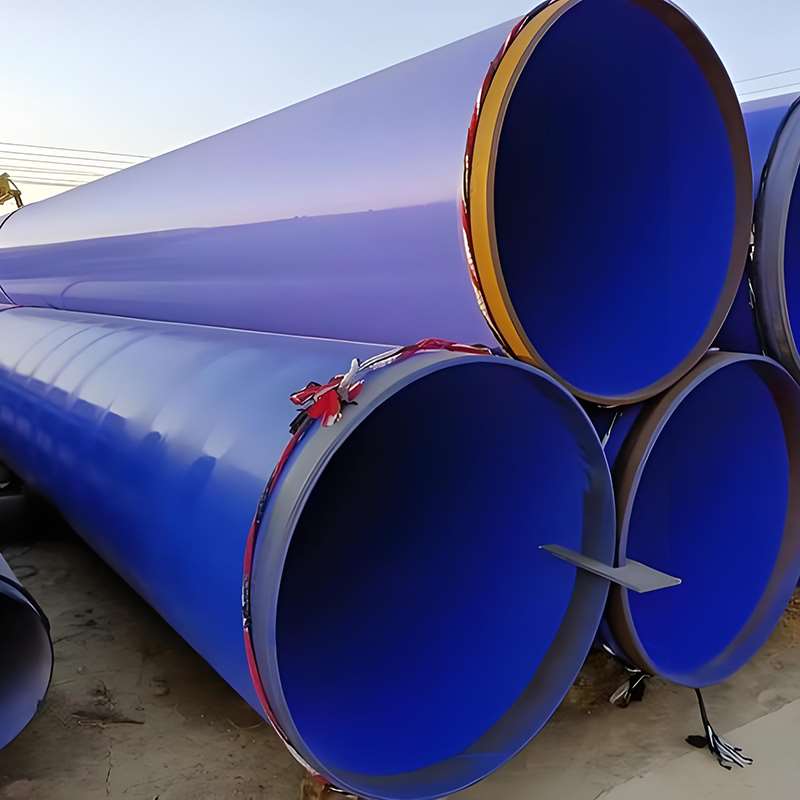
FBE is a single-layer anti-corrosion coating technology. Epoxy powder is electrostatically sprayed onto the preheated surface of a steel pipe. The powder then melts and cures, forming a dense cross-linked coating. Although this coating is relatively thin (typically 300–500 μm), it is molecularly bonded to the steel surface, providing excellent adhesion.
3PE (Three-Layer Polyethylene Coating):
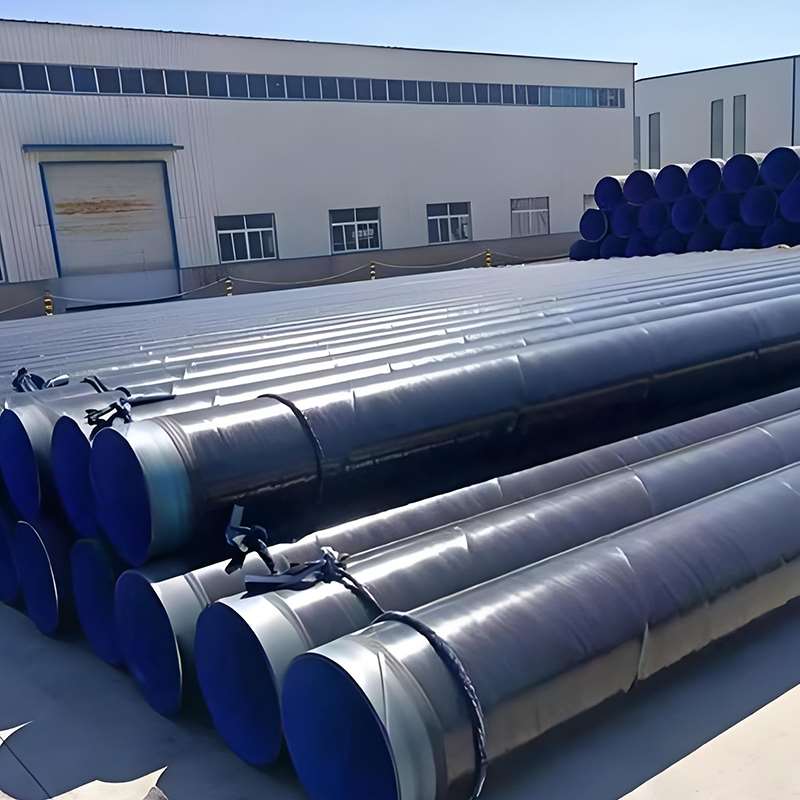
3PE is a three-layer composite anti-corrosion coating system. It actually uses FBE as its primer layer (typically ≥80 μm), followed by an adhesive layer (AD), and finally a thick high-density polyethylene (HDPE) outer layer, which typically ranges from 1.8 mm to 3.7 mm in thickness. In essence, 3PE can be regarded as a heavily reinforced version of FBE.
II. What Is the Difference Between the Corrosion Protection Mechanisms of 3PE and FBE?
How FBE Protects Steel Pipes (A Single-Layer Shield):
FBE primarily relies on its excellent adhesion and dense single-layer coating to isolate the steel pipe from water, oxygen, and corrosive chemicals. It acts like a tough, tightly bonded “protective skin” wrapped around the surface of the steel pipe, preventing corrosive substances from reaching the steel.
How 3PE Protects Steel Pipes (A Composite Armor):
Building on the FBE primer, 3PE adds an adhesive layer and a thick polyethylene outer layer to create a dual protection system that combines chemical corrosion resistance with physical protection. In this system, the inner FBE layer is responsible for chemical corrosion protection, while the outer polyethylene layer provides impact resistance, abrasion resistance, and an effective barrier against moisture.
In One Sentence:
FBE is like a close-fitting anti-corrosion underlayer, while 3PE is like adding a heavy layer of body armor over it. This is why 3PE is better suited for harsh, long-term buried pipeline environments.
III. Performance Comparison of 3PE and FBE: How to Choose the Right Anti-corrosion Coating for Steel Pipes?
| Comparison Item | 3PE Coated Steel Pipe | FBE Coated Steel Pipe | Selection Recommendation |
|---|---|---|---|
| Coating Structure | Three-layer system: FBE epoxy powder + adhesive (AD) + polyethylene (PE) | Single-layer fusion bonded epoxy powder coating | Choose 3PE when long-term comprehensive protection is required. |
| Main Corrosion Protection Mechanism | The epoxy layer provides corrosion protection, while the PE layer offers waterproofing and mechanical protection. | Relies on the dense epoxy coating to isolate the steel from moisture, oxygen, and corrosive substances. | Both provide excellent corrosion protection. |
| Water Resistance | Polyethylene has very low water absorption, making it ideal for long-term buried service. | The epoxy coating is dense, but its long-term performance in continuously wet environments is slightly lower than that of 3PE. | 3PE is recommended for areas with abundant groundwater or moist soil. |
| Resistance to Soil Corrosion | Suitable for complex underground corrosive environments. | Suitable for general soil corrosion environments. | Long-distance oil and gas pipelines typically use 3PE. |
| Mechanical Damage Resistance | The thick PE outer layer resists damage during transportation, backfilling, and soil friction. | The coating is relatively thin and more susceptible to damage during construction. | Choose 3PE for rocky terrain or complex construction conditions. |
| Adhesion | The FBE primer provides excellent adhesion to the steel surface. | The epoxy powder is directly bonded to the steel, providing exceptionally strong adhesion. | FBE has an advantage when maximum coating adhesion is required. |
| Chemical Corrosion Resistance | Combined protection from both the epoxy and PE layers. | Epoxy provides excellent chemical resistance. | Chemical service applications should be evaluated based on the specific medium being transported. |
| Cathodic Disbondment Resistance | Good performance, provided coating quality and application are well controlled. | FBE offers excellent resistance to cathodic disbondment. | FBE may be preferred where cathodic protection system performance is a key requirement. |
| Temperature Resistance | Generally suitable for low- to medium-temperature applications. Higher temperatures require special design. | Typically offers better high-temperature resistance. | High-temperature applications should be evaluated separately. |
| Coating Thickness | Thick coating, typically 1.8–3.7 mm (depending on standards and project requirements). | Thin coating, typically 300–800 μm. | Thicker coatings provide better mechanical protection. |
| Construction Adaptability | Primarily applied in factory coating lines; field repair requires stricter procedures. | Mature application process with relatively convenient field repair. | FBE is more flexible when frequent on-site repairs are expected. |
| Service Life | Can achieve a design life of several decades in long-term buried environments. | Also provides long-term corrosion protection under suitable service conditions. | Service life depends on the environment, installation quality, and quality control. |
| Procurement Cost | Higher initial cost, but offers stronger overall protection. | More economical. | Large, long-term projects should focus on life-cycle cost rather than initial purchase price. |
| Typical Applications | Long-distance oil and gas pipelines, city gas distribution, and underground water transmission projects. | Water transmission pipelines, station piping, pipe fittings, and general anti-corrosion projects. | Select the coating based on environmental risks rather than price alone. |
IV. Selection Insights Based on Pipe Type and Application Scenarios
In real-world engineering projects, the choice of an anti-corrosion coating must be closely matched with both the type of steel pipe and the installation environment.
Complex Terrain and Harsh Backfilling: Where 3PE Coated Spiral Steel Pipe Excels
For long-distance water transmission and gas transmission pipelines that cross deserts, mountains, or rocky terrain, 3PE coated spiral steel pipe is generally the preferred choice.
Why choose 3PE?
During long-distance transportation, on-site lifting, and direct backfilling with soil and rocks, pipelines are subjected to significant friction and mechanical impact. Because the FBE coating is relatively thin, it can be scratched or damaged by sharp rocks, exposing the underlying steel to corrosion. In contrast, the several-millimeter-thick polyethylene outer layer of 3PE acts like a layer of body armor, providing outstanding resistance to the mechanical damage commonly encountered during demanding construction activities.
Horizontal Directional Drilling (HDD) and Specialized Pipeline Systems: The Unique Advantages of FBE Coated Spiral Steel Pipe
In urban underground pipeline rehabilitation and expansion projects, trenchless horizontal directional drilling (HDD) installations, and high-temperature district heating networks, FBE coated spiral steel pipe often offers distinct advantages.
Why choose FBE?
First, the 3PE coating is relatively thick and rigid. During HDD pullback operations or when the pipeline undergoes slight bending, the high shear forces can cause the polyethylene outer layer to separate from the underlying coating layers.
Second, FBE exhibits what is commonly referred to as current permeability in cathodic protection systems. If the coating is accidentally damaged, the impressed cathodic protection current can still reach the exposed steel surface and provide electrochemical protection. By contrast, if the outer polyethylene layer of a 3PE coating is torn and a gap forms between the layers, it may shield the cathodic protection current, creating conditions for hidden crevice corrosion to develop.
In addition, FBE offers better high-temperature resistance, making it more suitable for pipelines that transport warm or hot media.