
I. What Does SSAW Mean?
Let’s break this industry term down into something easier to understand.
- SSAW stands for Spiral Submerged Arc Welded. It refers to steel pipe manufactured by continuously forming a steel coil into a spiral shape and joining the edges using the submerged arc welding (SAW) process. In industry standards, it is commonly called spiral submerged arc welded steel pipe.
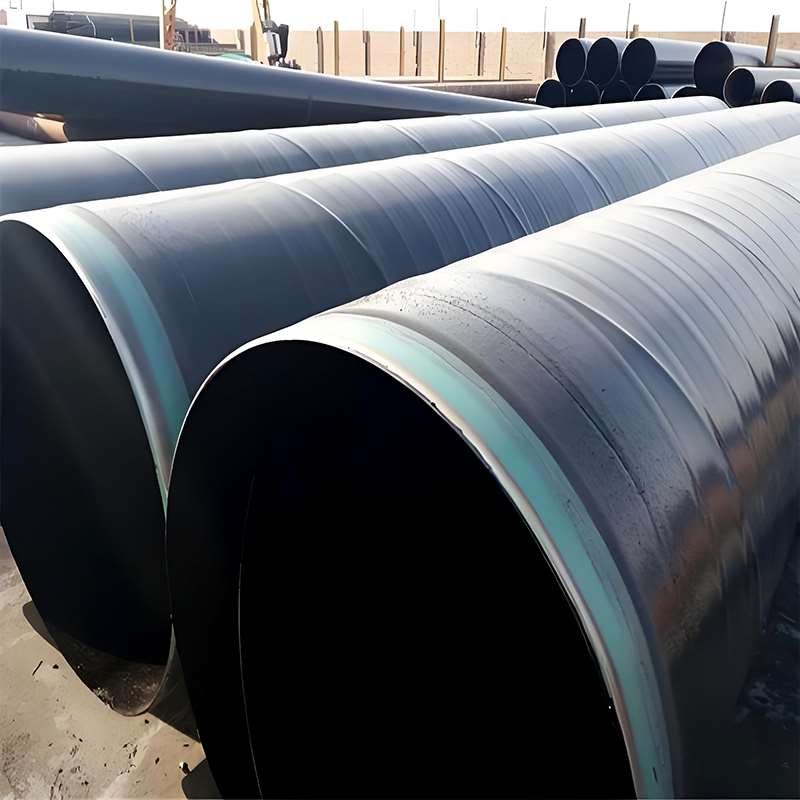
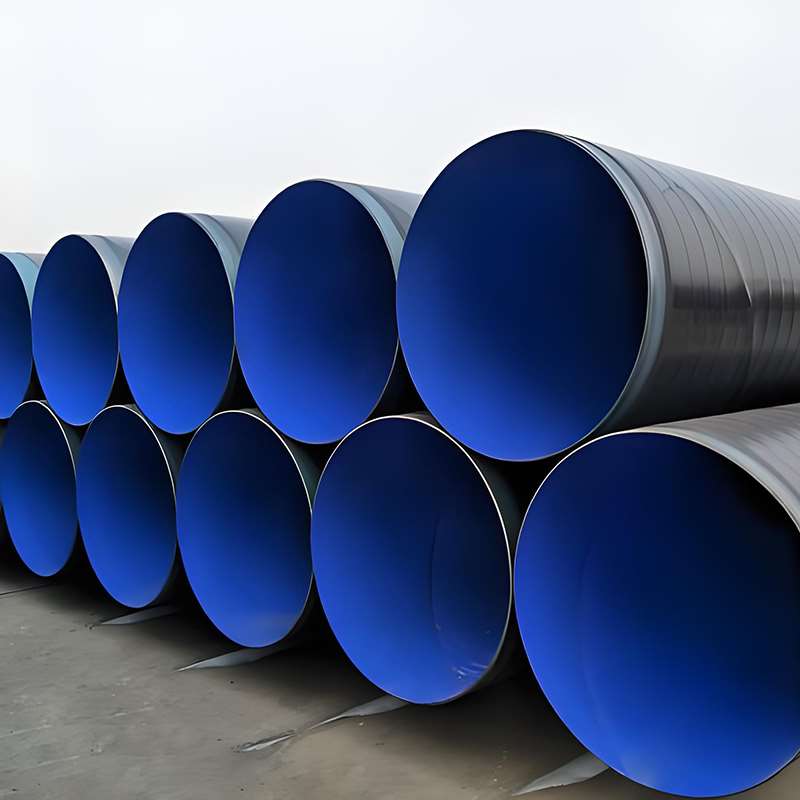
- The word anti-corrosion (or coated) means that after the pipe is manufactured, a protective coating is applied to its outer surface—and in some applications, to the inner surface as well. Common coating systems include 3PE (Three-Layer Polyethylene), FBE (Fusion Bonded Epoxy), and coal tar epoxy. These coatings create a durable barrier that protects the steel from moisture, soil chemicals, and other corrosive elements.
In simple terms, an anti-corrosion SSAW steel pipe is a large-diameter spiral welded steel pipe that has been coated with a long-lasting protective system to significantly improve its resistance to corrosion and extend its service life.
II. Core Manufacturing Process: How is it made?
The manufacturing process of SSAW steel pipes is aesthetically pleasing: long strips of low-carbon structural steel or low-alloy steel are rolled into a spiral shape at a specific angle, and then the seam is welded together.
The core welding technology is called “submerged arc welding,” where the electric arc burns under a layer of flux, not exposed to the air. This process has two major advantages:
- Double-sided welding: During pipe forming, automatic submerged arc welding is performed simultaneously on both the internal and external sides, resulting in full welds and a high rate of flaw detection compliance.
- Large diameter advantage: The value of this process lies in its ability to produce much larger diameter pipes from narrower steel strips. This reduces raw material costs for long-distance, high-flow transportation projects.
III. What are the common types of anti-corrosion SSAW steel pipes?
1. 3PE Coated Spiral Steel Pipe
3PE is currently the most widely used and highest-performing method for long-distance buried pipelines. It consists of three layers of materials tightly bonded together, with clearly defined functions:
| Layer | Core Material | Primary Function |
|---|---|---|
| Primer Layer | Fusion Bonded Epoxy (FBE) | Provides a strong chemical bond to the steel surface and serves as the primary anti-corrosion barrier. |
| Adhesive Layer | Adhesive (AD) | Acts as the bonding layer, permanently fusing the FBE primer to the outer polyethylene layer. |
| Outer Layer | High-Density Polyethylene (HDPE) | Forms a tough polyethylene shell, typically several millimeters thick, providing excellent waterproofing, impact resistance, and mechanical protection. |
Advantages: Extremely waterproof, impact-resistant, and wear-resistant; can be used underground for over 50 years.
Applicable Scenarios: This technology is often combined with anti-corrosion spiral steel pipes and is the mainstay of oil and gas trunk lines and long-distance, large-diameter underground water transmission projects.
2. FBE Coated Spiral Steel Pipe
FBE is a single-layer protective film formed by directly thermally spraying epoxy powder onto the steel pipe and curing it.
- Advantages: Although the coating is thin, it has strong adhesion and is corrosion-resistant. Its characteristic is that it “does not shield cathodic protection current,” meaning that if an external anti-corrosion electrochemical system is connected, the current can directly penetrate it to protect the steel pipe. It is also more heat-resistant than 3PE.
- Applicable Scenarios: Urban pipeline network renovation and expansion, underground directional drilling crossings, and oil and gas station pipelines.
3. Epoxy Coated Steel Pipe
This mainly utilizes liquid epoxy resin paint, which is directly sprayed or brushed onto the surface of the steel pipe.
- Advantages: No large-scale high-temperature forming equipment is required; construction and repair can be carried out directly on-site, resulting in high overall cost-effectiveness.
- Applicable Scenarios: Indoor pipe networks, equipment connection pipes, and conventional anti-corrosion projects in relatively mild environments.
IV. Buyer’s Guide: What Should You Check When Purchasing Anti-Corrosion SSAW Steel Pipe?
When sourcing anti-corrosion SSAW steel pipe, don’t focus solely on the price. The following three factors have a direct impact on the pipeline’s long-term reliability and service life.
1. Coating Thickness at the Spiral Weld Seam
The spiral weld seam is the most critical area of an SSAW pipe and the location where coating defects are most likely to occur.
Because the weld seam has a raised profile, an inadequate coating process or insufficient pressure from the coating rollers can cause the protective layer to become thinner over the weld or leave tiny voids along both sides of the seam. These imperfections may allow moisture to penetrate beneath the coating, leading to premature corrosion.
When evaluating a supplier, always request a coating thickness inspection report specifically covering the weld seam area, rather than relying only on the average coating thickness of the pipe body.
2. Non-Destructive Testing (NDT) Coverage
Since SSAW pipes have a continuous spiral weld, weld quality is critical to the overall integrity of the pipeline.
Verify that the manufacturer performs 100% non-destructive testing (NDT)—typically X-ray radiographic testing (RT) or automatic ultrasonic testing (AUT/UT)—to ensure the weld is free from internal defects such as porosity, cracks, lack of fusion, or incomplete penetration.
3. Surface Preparation Before Coating
The long-term performance of any anti-corrosion coating depends largely on how well the steel surface is prepared before coating.
International standards generally require the steel surface to be abrasive blast-cleaned to Sa 2.5 before the coating is applied. Proper surface preparation removes rust, mill scale, and contaminants, allowing the coating to achieve maximum adhesion.
If the blast cleaning process is poorly executed, the coating may begin to disbond and peel away after only a few years of underground service, exposing the steel to severe corrosion and significantly shortening the pipeline’s service life.