
In pipeline projects that transport oil, natural gas, water, or industrial media, pipeline corrosion is often an “invisible killer” that leads to safety incidents and massive economic losses. Faced with a multitude of international standards and complex operating conditions, how can you select a set of pipeline coating standards that is suitable for your project?
This article will provide you with a clear and practical guide to selecting pipeline coating standards from four perspectives: environmental assessment, coating types, standard comparisons, and the selection process.
I. Defining the Environment and Operating Conditions
Before selecting a corrosion protection standard, conduct a precise assessment of the pipeline’s “operating environment” and “operating conditions”:
- Installation Environment: Is the pipeline buried on land, submerged underwater/on the seabed, or exposed to the atmosphere? The soil’s resistivity, pH, and moisture content impose vastly different requirements on coating performance.
- Medium and Temperature: Does the pipeline transport highly acidic oil and gas, drinking water, or industrial wastewater? Operating temperatures (such as ambient, high, or cryogenic) directly determine the upper temperature limit of the coating material.
- Mechanical Stress: Activities such as pipeline crossing and backfilling during construction, as well as soil displacement during operation, can subject the coating to impact and delamination forces.
II. Understanding Mainstream Coating Standards and Their Applications
Various international standards set strict requirements for coating thickness, adhesion, impact resistance, and resistance to cathodic delamination. Common mainstream coatings and their standards include:
1. 3LPE / 3LPP (Three-Layer Polyethylene/Polypropylene)
- Common Standards: ISO 21809-1, DIN 30670
- Features: Combines the excellent adhesion of epoxy resin with the superior mechanical protection properties of polyethylene/polypropylene.
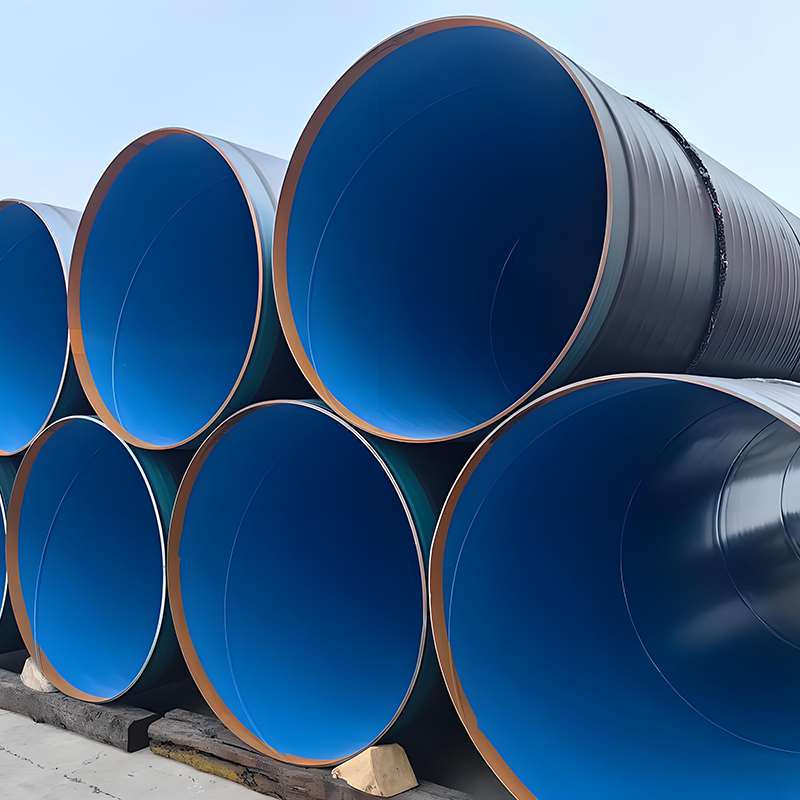
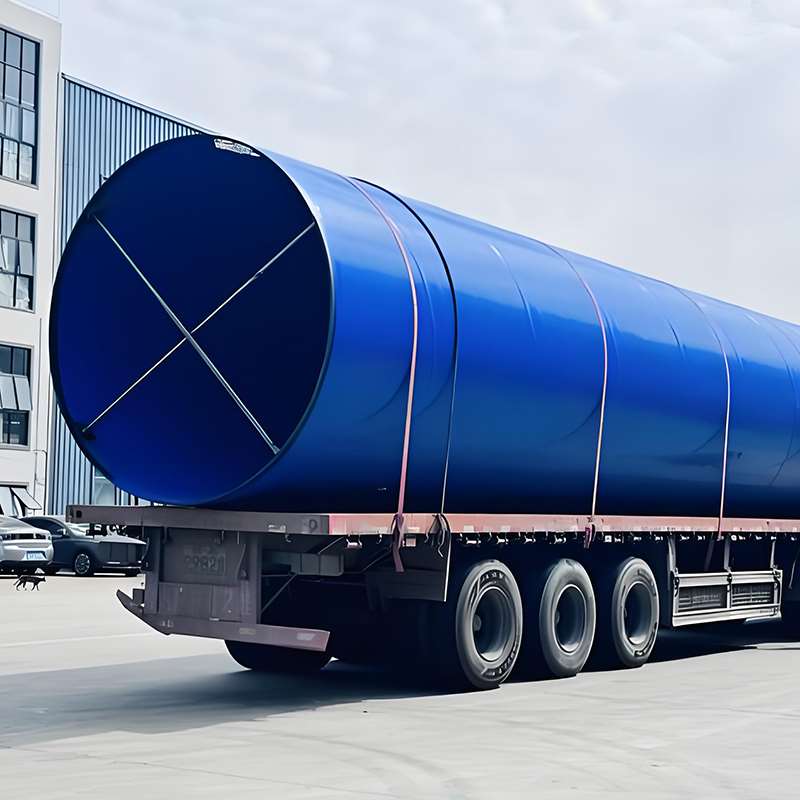
- Applications: Long-distance buried oil and gas transmission pipelines, and cross-section projects. In particular, coated spiral-welded steel pipes—renowned for their corrosion resistance and pressure-bearing capacity—are frequently selected for protection under the 3LPE/3LPP standard in large-scale water conservancy projects and long-distance transmission pipelines.
2. FBE (Single-Layer/Double-Layer Fusion-Bonded Epoxy Powder)
- Common Standards: API RP 5L9, CSA Z245.20, ISO 21809-2
- Features: Strong adhesion, excellent resistance to cathodic disbonding, and a wide temperature resistance range.
- Applications: Directional drilling crossings, special-shaped fittings, or as the base layer of a three-layer structure (3LPE).
3. Liquid Epoxy Coating / Polyurethane Coating
- Common Standards: AWWA C210 (waterworks standard), ISO 21809-3 (field joint repair/non-circular components)
- Features: Flexible application; commonly used for internal pipeline corrosion protection or field joint repair.
III. 4-Step Method for Selecting the Appropriate Pipe Coating Standard
- Assess the Environment/Operating Conditions ──> 2. Match the Coating Type ──> 3. Determine International/Industry Standards ──> 4. Specify Inspection and Acceptance
Step 1: Identify Materials Based on Operating Temperature and Soil Conditions
- Low/medium temperatures (< 70°C) with high mechanical impact: Give priority to 3LPE coatings compliant with ISO 21809-1 or DIN 30670.
- High-temperature environments (70°C – 110°C): Upgrade to the 3LPP coating standard.
- Indoor or non-extreme soil environments: Evaluate the cost-effectiveness of FBE or liquid epoxy coatings.
Step 2: Refer to Industry Standards for the Project
- Oil and gas projects: Compliance with API or ISO 21809 series standards is typically mandatory.
- Municipal water supply and wastewater projects: Prioritize AWWA (American Water Works Association) standards, such as AWWA C213 or AWWA C210 for water supply pipelines.
Step 3: Prioritize Compatibility Between Pipes and Coatings
- For large-diameter, high-pressure pipelines, the weld bead height and surface quality of coated spiral steel pipes can affect the coating’s adhesion. Therefore, when ordering coated spiral steel pipes, standards must clearly specify the rust removal grade and anchor pattern depth for the pipe surface to ensure the coating adheres tightly to the pipe surface.
Step 4: Strictly Enforce Inspection Standards
- Even the best standards are ineffective without proper implementation through testing. Procurement contracts and construction specifications must include the following key inspection criteria:
- Electrospark leak detection: To detect pinholes in the coating (high-voltage test kV values are typically set based on coating thickness).
- Adhesion/peel test: To ensure the coating is firmly bonded to the steel pipe body.
- Coating thickness measurement: To ensure the minimum average thickness specified by the standard is achieved.