
Both underground water pipes and natural gas pipelines are buried several meters deep underground. Once the project is completed and backfilled, no one wants to have to dig them up again for repairs a few years later. Therefore, selecting the right pipe materials to ensure safe operation for decades is the most critical aspect of both construction and procurement.
In everyday water supply and gas transmission projects, we often hear various technical terms. In reality, the logic behind selecting the right materials isn’t complicated; the key lies in clearly understanding the application scenario, choosing the appropriate pipe material, and carefully managing construction details.
I. What are the differences in pipeline requirements for water and natural gas transmission?
Although both are buried pipelines, water and natural gas differ significantly in their properties:
- Water transmission pipelines: The focus is on corrosion resistance and flow rate. Since tap water or industrial water is used in large volumes, the pipe diameters are typically quite large. Buried in the ground, water pipes are most vulnerable to corrosion and perforation caused by moisture and acidic or alkaline components in the soil, which can lead to leaks and secondary water contamination.
- Natural gas pipelines: The focus is on high-pressure resistance and absolute safety. Natural gas is flammable and explosive, and the pressure inside the pipelines is often much higher than that in water pipelines. A leak could have catastrophic consequences. Therefore, natural gas transmission places extremely high demands on the pressure-bearing capacity of the steel pipes, the steel grade, and the integrity of the anti-corrosion coating.
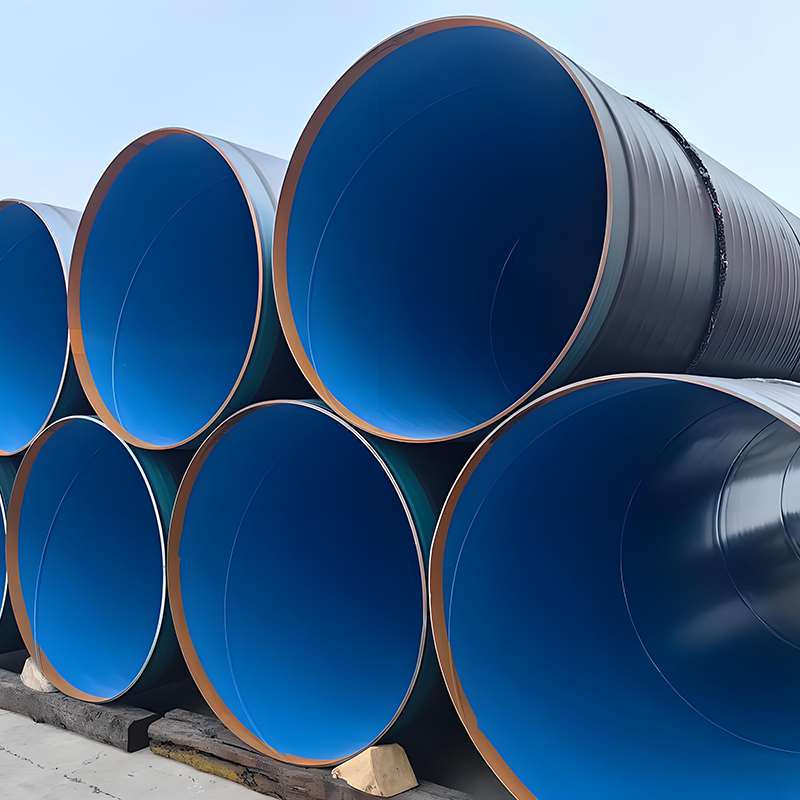
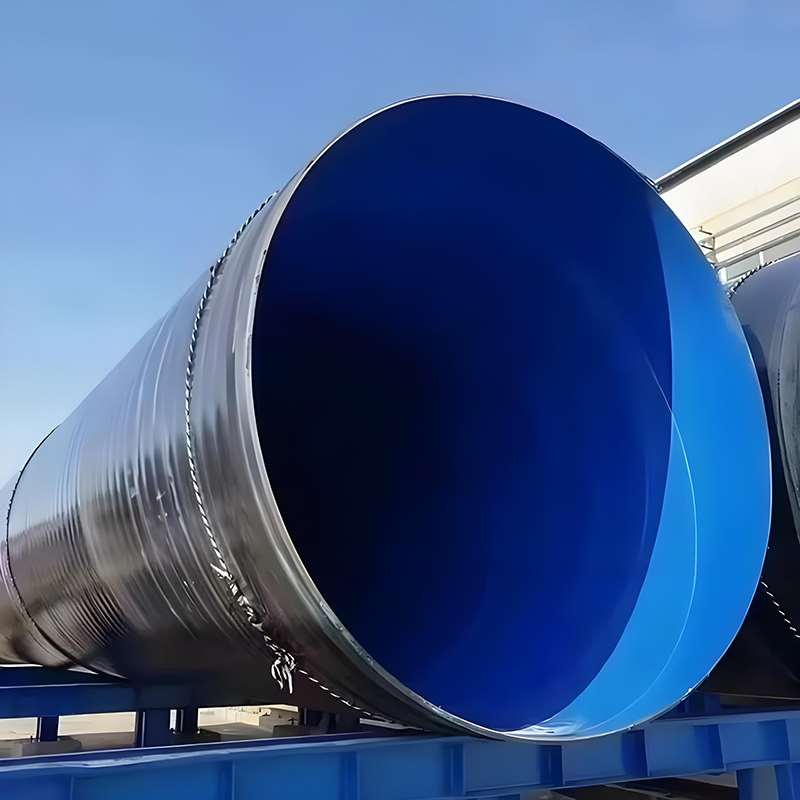
Given these two sets of requirements, corrosion-resistant spiral-welded steel pipes have become the mainstay of today’s medium- and large-diameter buried pipeline networks. The structure of spiral-welded steel pipes is inherently suited for large diameters, while the outer corrosion-resistant coating is key to preventing them from being “eaten away” by the soil.
II. How Should You Select the Right Pipes for Actual Projects?
When purchasing pipes or determining a construction plan, there’s no need to memorize complex chemical engineering principles; instead, focus primarily on the following two practical criteria:
- Consider the Soil Environment and Service Life Requirements
If the pipeline needs to be buried long-term in a subterranean environment that is damp, has high salt or alkali content, or is subject to stray currents, a standard single-layer paint coating or ordinary anti-corrosion treatment is far from sufficient. In such cases, underground 3PE anti-corrosion steel pipes are a highly proven and reliable choice. Their outer anti-corrosion layer offers strong resistance to physical impact and chemical corrosion, effectively isolating the metal pipe wall from the soil and extending its service life. - Consider the conveyed medium and pressure rating
The maximum pressure a pipeline can withstand depends primarily on the steel pipe’s material and wall thickness.
For ordinary low-pressure water transmission, standard Q235 spiral-welded steel pipes with anti-corrosion coating are generally sufficient;
For long-distance water transmission, medium- to high-pressure natural gas transmission, or sections with undulating terrain that require higher pipe strength, pipes made of higher-grade steel must be selected. For example, API 5L X42 3PE-coated spiral steel pipes are widely used in many intercity natural gas branch lines and water supply trunk lines. Here, “X42” indicates that the steel pipe has a high yield strength; when combined with 3PE external corrosion protection, this ensures that the pipe can withstand high internal pressure while remaining protected from external corrosion.
III. Avoiding “Hidden Pitfalls”: 3 Key Details That Determine Pipe Lifespan
Whether a high-quality pipe buried underground can truly last for decades often depends not on the pipe itself, but on the following operational details:
- Preventing Impacts During Transportation and Hoisting
No matter how durable the anti-corrosion coating is, it remains vulnerable to hard impacts. During transportation and on-site hoisting, lifting slings must be used; it is strictly prohibited to hook the pipe ends directly with steel wire ropes, as this can easily scratch the anti-corrosion coating. If a damaged coating goes undetected and is buried in the ground, the damaged area will become a “weak spot” that accelerates corrosion. - Quality of Weld Joint Repair
Spiral steel pipes require welding during on-site connection, which can burn away or expose the anti-corrosion coating at the weld. On-site “repair” of these joints is the weakest link in the entire anti-corrosion system. It is essential to ensure that the repair area is thoroughly derusted, heated evenly, and tightly sealed, leaving no air bubbles or gaps. - No Omissions in Electrical Spark Testing
Before backfilling the trench, the entire anti-corrosion coating must be scanned using an electrical spark leak detector. If the detector sounds an alarm, it indicates the presence of pinholes or damage, which must be promptly repaired using repair rods or patches before backfilling can proceed.