
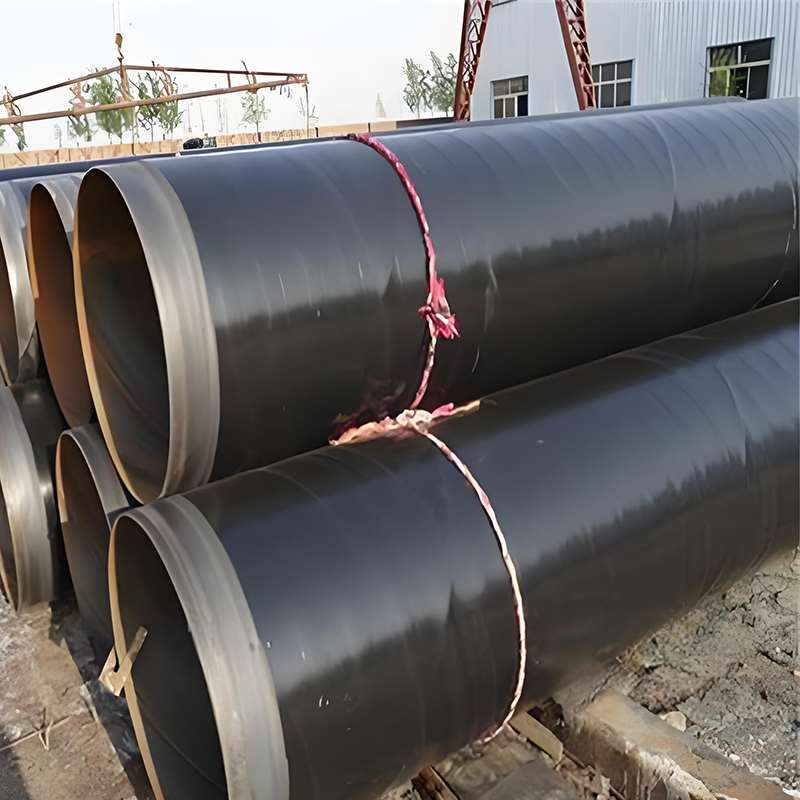
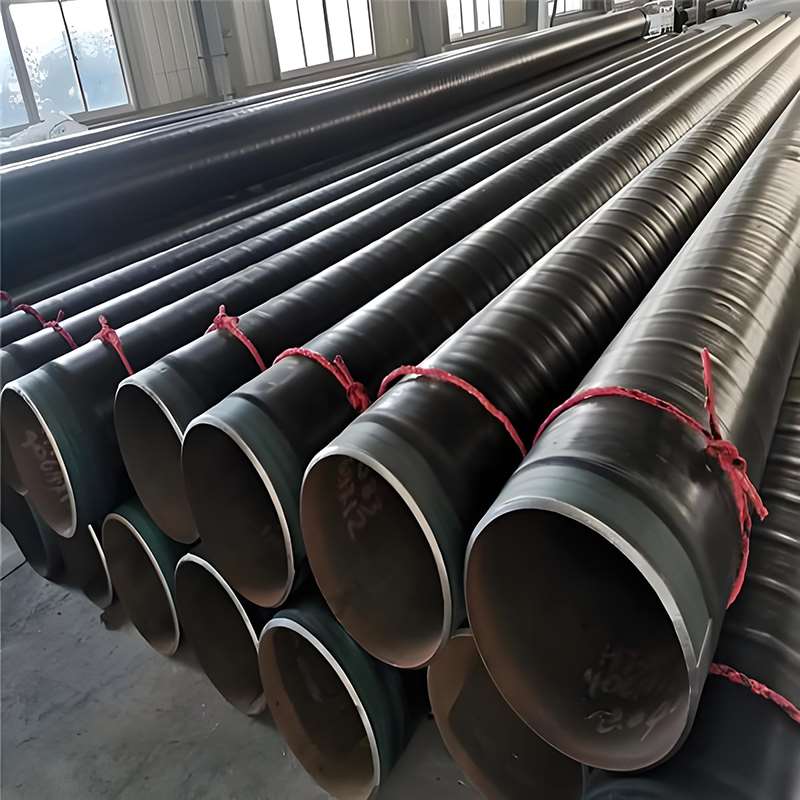
When purchasing industrial pipes, you’ll often come across a string of seemingly complex specification codes, such as “API 5L spiral-welded steel pipe with 3PE coating.” In fact, if you break down this name, it’s not mysterious at all:
- API 5L refers to the fact that the steel pipe complies with the pipeline steel standard (suitable for transporting oil, natural gas, water, etc.);
- “spiral welded steel pipe” refers to its manufacturing process, which is suitable for medium- to large-diameter pipes;
- and “outer 3PE coating” means the pipe is coated with a layer of corrosion protection.
For procurement professionals, construction crews, or project managers, understanding these technical codes is certainly important, but the more critical question is: In actual engineering projects, what are the specific advantages of this type of pipe? How should it be selected and used to avoid pitfalls?
I. Why Are These Types of Pipes So Popular in Underground Construction Projects?
Many underground trunk line projects often require pipes to be buried dozens of meters underground or to traverse wilderness, saline-alkali land, or wetlands. In such environments, the pipes face two major challenges: internal pressure and external corrosion.
- High Internal Pressure Resistance and Large Diameter: The API 5L standard imposes strict requirements on the material and strength of steel pipes to ensure they can withstand the transportation of high-pressure fluids. Spiral-welded carbon steel coated steel pipes, with their spiral welds, allow for the production of large-diameter pipes at a relatively economical cost, making them ideal for long-distance, high-flow transmission trunk lines.
- Resistant to External Corrosion and Long Service Life: When buried in moist soil, steel is susceptible to electrochemical corrosion. If only ordinary bare pipes are used, the pipe walls may be corroded through within a few years, leading to leaks. With 3PE-coated spiral-welded steel pipes, the outer anti-corrosion coating acts as a robust barrier, completely isolating the steel from water and acidic or alkaline substances in the soil, resulting in a service life that often reaches 30 to 50 years.
II. Procurement and Selection: How Do You Determine If You Need It?
When finalizing a plan, many people tend to fall into one of two extremes: either they choose pipes with insufficient corrosion resistance to save money, leading to skyrocketing maintenance costs later on; or they blindly pursue high-specification products, resulting in a waste of budget.
You can assess your needs based on the following two factors:
- Consider the medium and pressure: If your project involves the transmission of high-pressure natural gas or shale gas, or long-distance water conveyance with high head, then selecting API 5L-standard piping is essential, as it provides a sufficient safety margin.
- Consider the installation environment: If the pipeline passes through areas with high groundwater levels, high soil salinity, or stray currents (such as near subways or high-voltage power grids), a standard single-layer coating simply cannot withstand corrosion. In such cases, selecting high-quality corrosion-resistant steel pipes is the minimum requirement for ensuring the long-term safe operation of the project.
III. Guide to Avoiding Pitfalls: 3 Stages on the Construction Site That Can Easily Damage the Corrosion-Resistant Coating
Just because you’ve purchased pipes that meet quality standards doesn’t mean you’re set for good. At many construction sites, pipes that were in perfect condition when they left the factory develop problems within a few years of being buried underground—and in most cases, this is due to mistakes made during the construction process.
- Rough Unloading and Stacking
- Although the anti-corrosion coating is highly durable, it cannot withstand violent impacts. When unloading on-site, it is strictly prohibited to hook the pipe ends directly with steel wire ropes or to tie the pipe bodies; specialized flat slings must be used. When stacking, the ground must be padded with railroad ties or sandbags to prevent the steel pipes from coming into direct contact with sharp rocks.
- Substandard Pipe End Welding and Joint Sealing
- Spiral steel pipes typically have 10–15 centimeters of bare pipe left at both ends to facilitate on-site butt welding. The welded joint is the weakest link in the anti-corrosion protection of the entire pipeline. When sealing the joints, ensure thorough rust removal, uniform heat treatment, and a tight fit of the heat-shrink sleeve; no air bubbles or gaps are permitted.
- Foreign Objects Mixed into Backfill Soil
- After the pipeline is laid in the trench, the first layer of backfill is critical. It is strictly prohibited to dump soil containing large rocks, bricks, or concrete chunks directly onto the pipe body, as such hard objects can easily damage or puncture the outer protective layer.