
In large-scale pipeline projects involving oil, natural gas, water supply, chemical industries, and other sectors, steel pipes are often buried underground for long periods or exposed to complex environmental conditions. Corrosion has always been one of the key factors affecting pipeline safety and service life.
Many pipeline failures are not caused by insufficient strength of the steel pipe itself, but rather by corrosion that gradually reduces the pipe wall thickness, eventually leading to leakage or even pipeline rupture.
So, why are more and more engineering projects choosing 3PE anti-corrosion technology? How does the 3PE coating actually protect steel pipes from corrosion? Can it truly extend the service life of pipelines for several decades?
This article will provide an in-depth analysis from the perspectives of the causes of corrosion, the structure of 3PE coatings, the protection mechanism, and practical engineering applications.
I. Why Are Steel Pipes Prone to Corrosion?
The primary component of steel pipes is iron, and iron naturally tends to return to a more stable oxidized state in nature. When the surface of a steel pipe comes into contact with moisture, oxygen, salts, acidic or alkaline substances, or microorganisms at the same time, electrochemical reactions are triggered, leading to corrosion.
In practical engineering applications, the following three harsh environments can accelerate the corrosion rate of steel pipes exponentially:
- Underground Moisture Environment:
Soil surrounding buried pipelines is rich in moisture and various mineral salts. Together, these elements form a natural “electrolyte solution,” causing continuous electrochemical corrosion on the surface of the steel pipe. - High-Salt Coastal Environment:
Sea breezes and tidal air contain high concentrations of chloride ions. Chloride ions have extremely strong penetrating ability and can easily destroy the passive protective film on the steel surface, causing localized pitting corrosion and even widespread deterioration. - Oil and Natural Gas Transportation Environment:
The internal environment of oil and gas pipelines often contains carbon dioxide (CO₂), hydrogen sulfide (H₂S), and trace amounts of water. These substances can create an acidic corrosive environment inside the pipeline, gradually damaging the pipe wall from within and compromising pipeline safety.
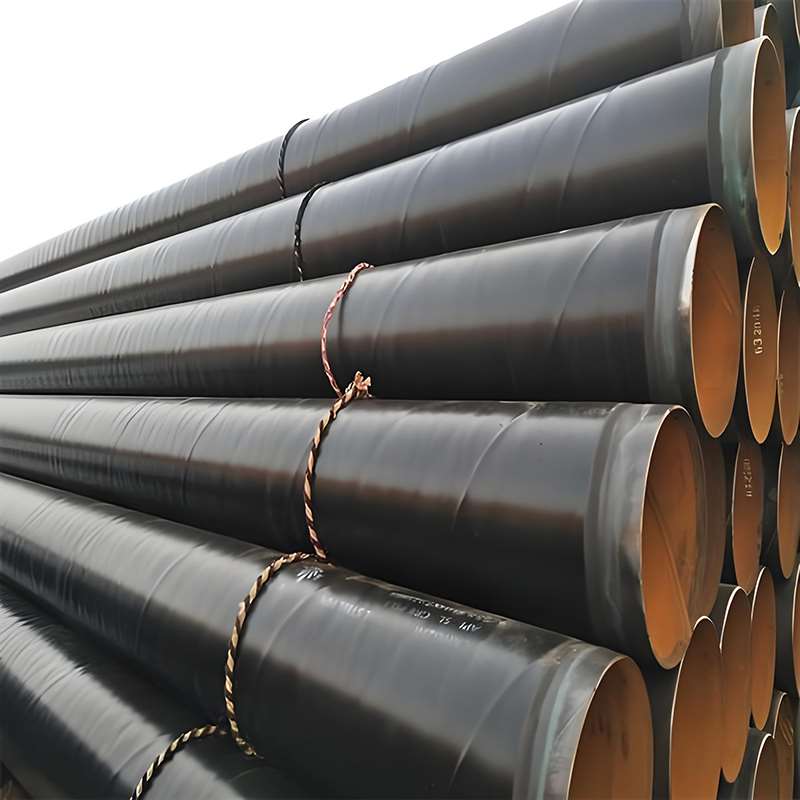
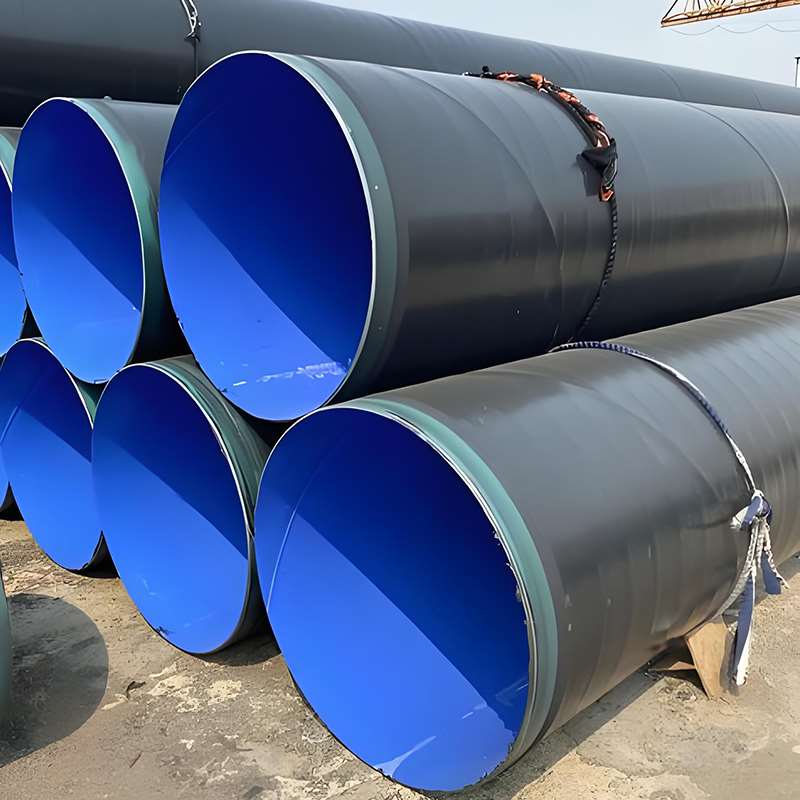
II. The “Three-in-One” Protection Mechanism of 3PE Coating
Inner Layer: Fusion Bonded Epoxy (FBE, Thickness ≥ 80 μm)
The FBE layer is directly applied to the surface of the steel pipe after sandblasting and rust removal. Epoxy resin has extremely strong bonding strength, allowing it to firmly adhere to the steel substrate. It provides excellent adhesion performance and outstanding resistance to cathodic disbondment, effectively preventing moisture and corrosive substances from penetrating laterally through the coating system.
Middle Layer: Copolymer Adhesive (AD, Thickness 170–250 μm)
Since epoxy resin and the outer polyethylene layer cannot bond firmly with each other directly, the middle adhesive layer acts as a “molecular bridge.” It chemically reacts and bonds with the epoxy resin layer while simultaneously fusing with the molten polyethylene outer layer, tightly locking the inner and outer layers together.
Outer Layer: High-Density Polyethylene (HDPE, Thickness 1.8–3.7 mm)
The polyethylene outer layer serves as the primary defense against external damage. It has extremely low water absorption, effectively blocking moisture and acidic, alkaline, and salt substances in the soil. At the same time, it offers high mechanical strength, excellent impact resistance, and strong scratch resistance, ensuring that the anti-corrosion coating remains intact during transportation, lifting operations, and backfilling activities.
III. The Core Principles of How 3PE Coating Protects Steel Pipes from Corrosion
Many people mistakenly believe that 3PE anti-corrosion steel pipes are simply “wrapped with a layer of plastic” on the surface. In reality, the corrosion protection performance of 3PE comes from the synergistic effect of its three-layer structure. The core protection mechanisms are mainly reflected in the following four aspects:
- Physical Isolation Barrier: Corrosion occurs only when the corrosive medium is in direct contact with the steel. The continuous and dense structure of the 3PE coating isolates the steel pipe from the external environment, preventing moisture, oxygen, and salt penetration. For 3PE-coated spiral steel pipes buried underground for extended periods, this isolation capability is the core defense against soil corrosion.
- Excellent Water Permeability Resistance: Ordinary paint-based anti-corrosion layers are prone to blistering, cracking, or peeling under prolonged immersion in groundwater. The polyethylene material of the 3PE outer layer, however, has low water absorption and stable chemical properties, maintaining its anti-corrosion performance even under prolonged exposure to damp underground conditions.
- Prevention of Corrosion Caused by Mechanical Damage: Underground pipelines are subjected to friction during hoisting, impact from rocks, and soil pressure. If the anti-corrosion layer is damaged, exposing the steel pipe, localized corrosion points will quickly form. The sufficiently thick and impact-resistant 3PE outer layer effectively resists mechanical damage during construction.
- Extended Pipeline Lifespan: Exposed steel pipes in harsh soils may corrode and perforate within a few years. With 3PE anti-corrosion, the corrosion rate of pipelines is significantly reduced, meeting the operational requirements for decades or even more than 50 years. Therefore, in the extremely demanding field of energy transmission, 3PE coated spiral steel pipe for oil pipelines have near-stringent benchmark requirements for coating thickness, adhesion, and pinhole detection.
IV. What issues should be considered when purchasing 3PE anti-corrosion steel pipes?
Q1: Why should we look at the “international standard for the steel pipe base material” first, instead of just the pipe diameter?
A: Because different pressures and media require completely different strength grades for the steel pipes. The technical standards required for the project must be clearly defined during procurement. For example: Oil and gas transportation: Typically, strict compliance with API 5L (such as X42, X52, etc.) is required. These steel pipes have very high compressive strength and toughness.
Ordinary fluid or structural pipelines: ASTM A53 or ASTM A106 are commonly used.
If the wrong standard for the base material is selected or downgraded during procurement, even with excellent 3PE corrosion protection, the pipeline is prone to bursting and collapse under actual high pressure operation.
Q2: How can I determine if the quality of a 3PE anti-corrosion coating truly meets standards and is not simply a case of “cutting corners”?
A: The quality of 3PE anti-corrosion cannot be judged by the naked eye from a single layer of plastic. When purchasing, you must request and verify the following three key indicators from the manufacturer:
Coating Structure and Standards: Confirm whether it is manufactured strictly according to internationally recognized standards such as DIN 30670 or ISO 21809-1. Both the base epoxy powder and the intermediate adhesive layer are indispensable.
Finished Product Thickness: Check if the total thickness meets the standard (usually between 1.8mm and 3.7mm; the larger the pipe diameter, the thicker the required thickness).
Core Testing Reports: It is essential to confirm whether the product has passed 100% EDM (Electrical Discharge Machining) pinhole leak testing and peel strength testing before leaving the factory.
Q3: Why is it strongly recommended to choose a manufacturer that integrates “steel pipe manufacturing + anti-corrosion coating”?
A: Many small workshops use a piecemeal approach, buying pipes from factory A and having anti-corrosion work done by factory B. This easily leads to potential quality problems. Integrated manufacturers can complete steel pipe manufacturing, sandblasting and rust removal, anti-corrosion application, and a full range of quality inspections in one workshop.
The core value of choosing a large, integrated manufacturer lies in:
Eliminating secondary contamination: The steel pipes can be thermally sprayed immediately after rust removal, avoiding the risk of the surface re-oxidizing due to moisture during transportation.
Clearly defined responsibility: This avoids the situation where the steel pipe manufacturer and the anti-corrosion manufacturer pass the buck if coating peeling or quality problems occur later.