
I. Why Do Pipelines Need Both Internal and External Corrosion Protection?
When purchasing or designing pipelines, many people have a common misconception: “Since the steel pipe is buried underground, isn’t it enough to wrap the outside well and apply external corrosion protection?”
This approach only protects the outside while leaving the inside exposed to significant hidden risks. In reality, buried pipelines are subjected to a “double threat” throughout their service life, with corrosion coming from two completely different directions:
External Corrosion: “Gradual Erosion” from the Surrounding Soil
Main Causes: Moisture in the soil, mineral salts, chloride ions, underground microorganisms, and stray electrical currents.
Consequences: When a steel pipe is buried underground, if the external coating is damaged or deteriorates, moisture and oxygen in the soil can come into direct contact with the steel surface. Over time, this leads to localized pitting corrosion, widespread wall thinning, and eventually perforation and leakage of the pipeline.
Internal Corrosion: “Hidden Attacks” from the Transported Medium
Main Causes: It depends on what is flowing inside the pipeline.
Oil and Gas Pipelines: The transported medium often contains water, carbon dioxide (CO2), and highly toxic hydrogen sulfide (H2S), which create an acidic environment on the internal pipe wall and corrode the steel from the inside.
Water Supply Pipelines: Dissolved oxygen, free-floating microorganisms, and fluctuations in water quality continuously promote corrosion of the internal pipe wall.
Chemical Industry Pipelines: These pipelines are in direct contact with strong acids, strong alkalis, or other highly corrosive chemicals, placing extremely high demands on the corrosion resistance of the internal surface.
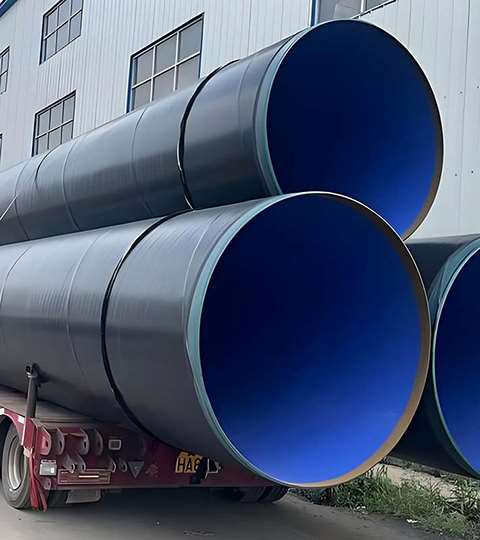
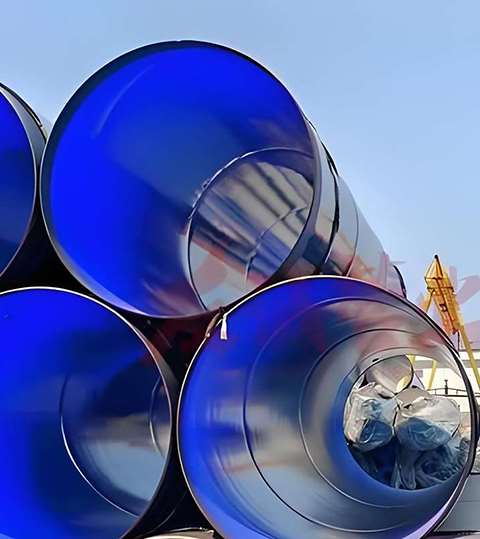
II. Introduction to External Corrosion Protection Coatings
The primary purpose of external corrosion protection is to isolate the pipeline from the surrounding soil environment. Since pipelines are buried underground, they must withstand soil pressure, impact from rocks, groundwater exposure, and microbial attack. Therefore, the external coating must provide excellent mechanical strength and resistance to water penetration.
At present, there are two mainstream external corrosion protection systems:
3PE Coating (Three-Layer Polyethylene System):
This process thermally bonds three layers—fusion bonded epoxy (FBE), an adhesive layer, and high-density polyethylene (HDPE)—into a single coating system. It is commonly used on large-diameter 3PE coated spiral steel pipes. The outer polyethylene layer is typically about 2 to 3 mm thick, providing a hard, wear-resistant, and impact-resistant surface that effectively protects the pipeline from scratches and mechanical damage during transportation, lifting, and backfilling.
FBE Coating (Fusion Bonded Epoxy):
This process involves directly applying epoxy powder to the external surface of the steel pipe, where it melts and cures into a continuous protective coating. Although the external coating of an FBE coated spiral steel pipe is thinner than that of a 3PE system, it offers exceptionally strong adhesion to the steel surface, along with excellent resistance to high temperatures and chemical corrosion. In addition, FBE coatings do not shield cathodic protection current. If the coating suffers minor damage, the externally applied cathodic protection current can pass directly through the coating to protect the steel pipe electrochemically. For this reason, FBE-coated pipelines are widely used in horizontal directional drilling (HDD) installations and within urban pipeline station facilities.
III. Introduction to Internal Corrosion Protection Coatings
Unlike the external surface, the internal wall of a pipeline does not need to withstand impacts from rocks or other external forces. However, it is in direct contact with the transported fluid. Therefore, the primary requirements for internal corrosion protection are resistance to the conveyed medium, resistance to fluid erosion, and a smooth surface to minimize internal flow resistance.
The most common internal corrosion protection systems include the following three types:
Liquid Epoxy Coating (Internal Anti-Corrosion and Flow Efficiency Coating):
A liquid epoxy resin coating is sprayed onto the internal pipe wall and cured to form a smooth lining. In oil and gas pipelines, it prevents acidic corrosion caused by carbon dioxide (CO2) and hydrogen sulfide (H2S) contained in the transported medium. At the same time, its smooth surface reduces gas flow resistance, increasing pipeline gas transmission capacity by approximately 5% to 10% while reducing energy consumption for long-distance pumping.
Internal FBE Coating (Fusion Bonded Epoxy Internal Lining):
This coating is also produced by thermally applying epoxy powder to the internal pipe wall, where it melts and cures into a dense protective layer. The coating offers excellent chemical resistance and is commonly used for pipelines transporting highly corrosive industrial wastewater, chemicals, or produced water reinjection containing high-salinity crude oil.
Cement Mortar Lining:
A specially formulated cement mortar is applied to the inside of the steel pipe using centrifugal lining or spray application. This system is primarily used for large-diameter municipal drinking water pipelines and conventional water transmission pipelines. The cement mortar prevents water from coming into direct contact with the steel surface, while its naturally alkaline environment promotes the formation of a passive film on the internal pipe wall, helping to prevent corrosion and scale buildup.
IV. What is the difference between internal and external corrosion protection?
| Comparison Item | External Corrosion Protection | Internal Corrosion Protection |
|---|---|---|
| Protected Area | External pipeline environment | Transported medium |
| Primary Corrosion Sources | Soil, water, salt spray | Water, gases, chemical media |
| Key Performance Requirements | Waterproofing, impact resistance, abrasion resistance | Chemical resistance, hygiene, safety |
| Common Coating Materials | 3PE, FBE, 3LPE | Epoxy, IPN8710, Plastic Coating |
| Typical Applications | Buried pipelines | Internal pipeline transport systems |
V. Pipeline Corrosion Protection Selection Guide: Which Combination Is Right for Your Industry?
1. Long-Distance High-Pressure Oil and Gas Transmission Pipelines
External Corrosion Protection: 3PE Coating
Internal Corrosion Protection: Liquid Epoxy Flow Coating
Selection Rationale: Oil and gas transmission pipelines are typically buried in remote deserts or mountainous areas. A 3PE coating system provides long-term protection against the complex corrosive conditions of underground soil while withstanding impacts from rocks and backfill during installation. Internally, the transported oil and gas often contain acidic components and flow at high velocities. A liquid epoxy coating not only protects the steel from acidic corrosion but also creates a mirror-smooth internal surface that reduces frictional resistance, increases gas transmission capacity by 5% to 10%, and lowers operating energy consumption.
2. Municipal Drinking Water and Long-Distance Water Transmission Projects
External Corrosion Protection: 3PE Coating (Large-diameter pipelines commonly use 3PE coated spiral steel pipes)
Internal Corrosion Protection: Cement Mortar Lining or Non-Toxic Drinking Water-Grade Epoxy Coating
Selection Rationale: During open-cut installation and backfilling, the hard polyethylene outer layer of a 3PE coating effectively prevents the coating from being scratched by rocks and blocks groundwater penetration. Since the pipeline transports drinking water, a cement mortar lining or a specially formulated non-toxic epoxy coating offers both cost-effectiveness and reliable water quality protection while preventing scale formation and microbial growth on the internal pipe wall.
3. Municipal Trenchless Projects (Horizontal Directional Drilling and Pipeline Network Rehabilitation)
External Corrosion Protection: FBE (Fusion Bonded Epoxy) Coating
Internal Corrosion Protection: Selected According to the Transported Medium (Cement Mortar or Non-Toxic Epoxy for Water Pipelines; Flow-Efficiency Epoxy for Gas Pipelines)
Selection Rationale: During trenchless installation using horizontal directional drilling (HDD) in urban environments, a 3PE coating may be susceptible to peeling because its relatively thick and rigid outer layer is exposed to severe friction and shear forces. In contrast, FBE coated spiral steel pipes feature a fusion bonded epoxy coating that forms a molecular-level bond with the steel surface, providing exceptional adhesion and resistance to pulling forces during pipe installation. In addition, FBE coatings do not shield cathodic protection current, making them better suited for the dense cathodic protection systems commonly found in urban pipeline networks.
4. Industrial Wastewater, Chemical Media, and Oilfield Produced Water Reinjection Pipelines
External Corrosion Protection: 3PE Coating or FBE Coating (Depending on the Buried Installation Method)
Internal Corrosion Protection: Internal FBE Lining (Fusion Bonded Epoxy Internal Coating)
Selection Rationale: These pipelines transport highly corrosive industrial wastewater, chemicals, or high-salinity crude oil. Conventional liquid coatings can easily soften and peel under prolonged exposure to these aggressive media. A dense, thermally applied FBE internal lining offers outstanding resistance to chemicals and high temperatures, effectively protecting the steel pipe from internal corrosion caused by highly aggressive substances.