
When large-diameter spiral-welded steel pipes are transported and buried deep underground, what often causes headaches for buyers is not the purchase price, but the catastrophic cracking, water leaks, gas leaks, and massive excavation and repair costs resulting from quality defects down the line.
To help you avoid pitfalls in project procurement, this article provides a practical “Guide to Avoiding Pitfalls and Making Decisions” by addressing four key areas of concern for buyers: compliance risks, manufacturing defects, supply chain management, and total cost of ownership.
I. How to See Through a Supplier’s “Compliance Facade”?
In international tenders, manufacturers often claim to be “compliant with standards,” but buyers must learn to assess the true value behind these certificates to avoid purchasing products that merely “skirt the rules.”
1. API 5L Certificates: Verify the “Scope of Production,” Not Just “Whether It Exists”
Many Chinese manufacturers present API 5L certificates when bidding. However, you must check the API’s official website directory to verify the manufacturer’s specific certified scope:
- Grade Restrictions: Is the manufacturer truly authorized to produce the specific high-grade steels required for your project (e.g., X65, X70, X80)?
- Specification Limits: Do the maximum outside diameter (OD) and maximum wall thickness (WT) covered by their certification meet your project’s procurement requirements?
- PSL2 Authorization: Does the certificate explicitly include PSL2 production authorization? For oil and gas projects or high-pressure pipelines, PSL1 authorization is far from sufficient.
2. AWWA C200 and Sanitary Certification for Water Supply Projects
For projects involving the conveyance of tap water or water diversion, purchasers often overlook the sanitary compliance of internal coatings:
- Steel pipes must comply with AWWA C200 or an equivalent standard.
- Internal anti-corrosion coatings must be certified to NSF/ANSI 61 or hold a water safety approval issued by the national Ministry of Health. Failure to comply with this requirement will result in an automatic rejection during subsequent environmental and sanitary inspections.
II. Buyers Should Keep a Close Eye on Three “Microflaws”
In the assembly-line production of SSAW spiral welded steel pipes, there are three critical process points that are prone to causing engineering quality issues later on—and these are also the key areas you must insist on inspecting when dispatching a third-party manufacturer’s representative:
- Control of “Excess Height” and “Misalignment” in the Spiral Weld
- Spiral welded steel pipes are manufactured by spirally coiling and welding steel strips, resulting in long welds. If the forming machine lacks sufficient precision, misalignment can easily occur, which weakens the weld’s pressure-bearing capacity.
- Furthermore, if the weld bead height on the inner and outer seams exceeds the standard (typically specified not to exceed 3.18 mm or higher limits), air gaps and blisters will form at the corners on both sides of the weld during subsequent 3PE extrusion wrapping or FBE spray coating for corrosion protection. Once buried deep underground, moisture will accumulate in these voids, leading to hidden crevice corrosion.
- Microscopic Weld Defects (Porosity and Cracks)
- During high-speed welding of SSAW pipes, insufficient shielding gas or rust on the edges of the steel strip can easily result in microscopic porosity or lack of fusion.
- Countermeasures: The purchaser must require the manufacturer in the technical agreement to perform dual non-destructive testing consisting of “in-line continuous ultrasonic testing (UT) + off-line X-ray radiography.” In particular, for the end welds at both ends of the steel pipes, due to unstable stresses during forming, 100% manual ultrasonic re-inspection must be added.
- “Anchor Pattern Depth” Before Corrosion Protection
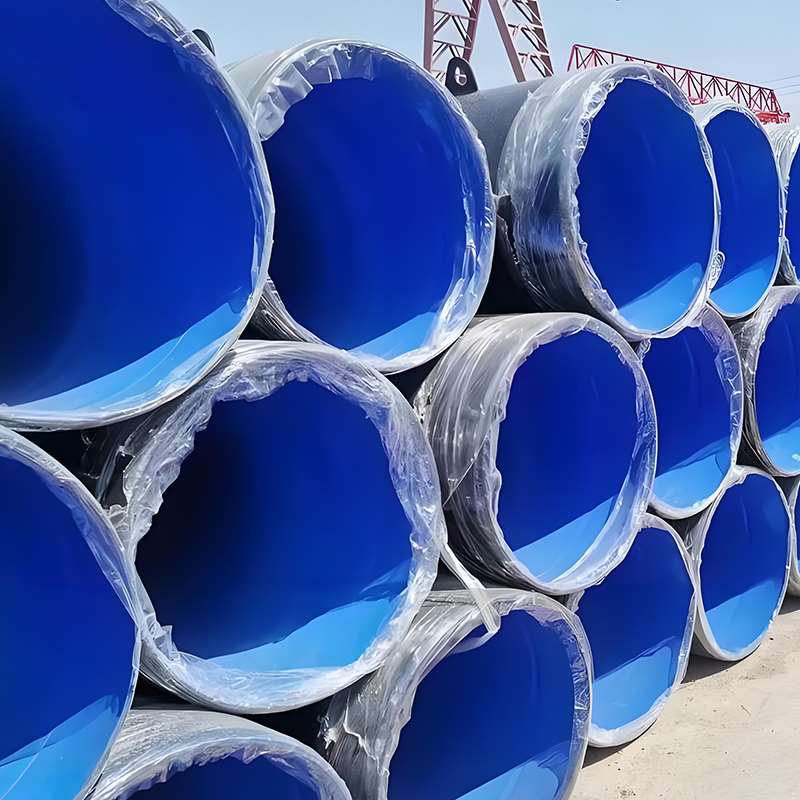
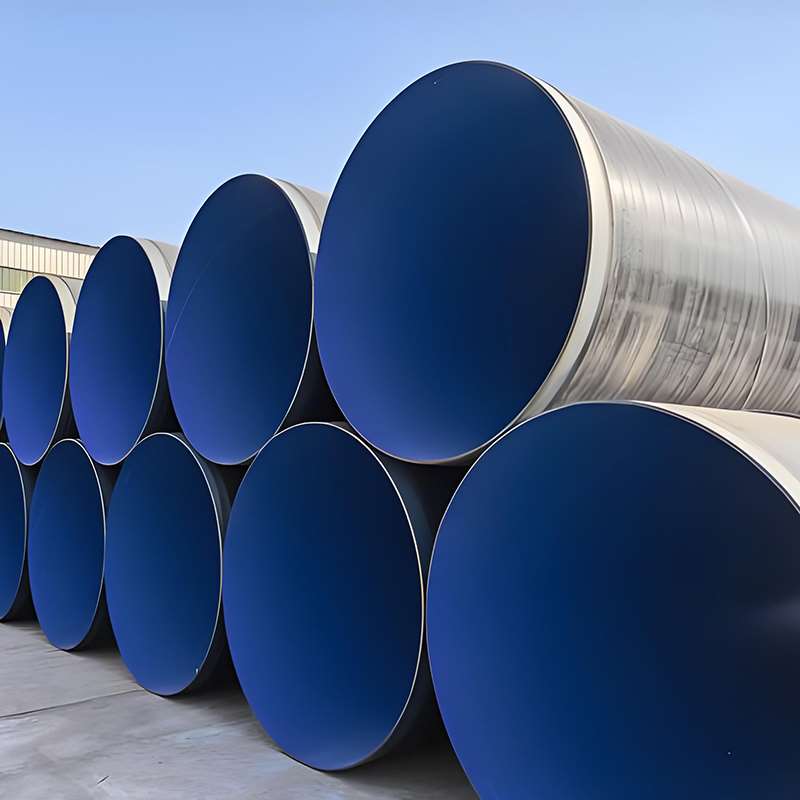
- To meet deadlines, many manufacturers perform shot blasting at excessive speeds. Although the surface appears to meet Sa 2.5 cleanliness standards, the anchor pattern depth often falls short of the required 40–100 micrometers. This can cause the anti-corrosion coating to peel off the steel pipe surface over large areas—much like tearing off adhesive tape—during subsequent transportation or under the stress of underground soil.
III. Supply Chain Insights: “Integrated Steel Pipe Mills” vs. “Outsourced Processing Plants”
This is a critical business decision that determines project delivery schedules and the continuity of quality control:
| Manufacturer Model | Quality Traceability | Logistics & Risk of Damage | Delivery Schedule Control |
|---|---|---|---|
| Integrated Manufacturer (in-house pipe rolling + in-house coating facility) | High. Steel pipe and coating are managed under the same quality system, with clear responsibility. | Low. Pipes go directly from rolling line to coating line without intermediate transportation. | Excellent control. Internal production scheduling is well coordinated and less affected by external factors. |
| Outsourced Processing Factory (pipes are transported to third-party coating plant after rolling) | Risk exists. If coating issues occur later, the two factories may shift responsibility to each other. | High. Bare pipes are vulnerable to rain, rust, and mechanical damage during transportation to coating facilities. | Difficult to control. Requires coordination between two factories’ capacities, and logistics is easily affected by weather conditions. |
Recommendations for the Purchaser:
For large-scale oil and gas projects and critical water diversion projects, it is strongly recommended to select a large, integrated manufacturer. If, due to price or special specifications, the purchaser is compelled to opt for a subcontracting model, the purchaser must include the third-party anti-corrosion manufacturer in the list of manufacturers to be audited and sign a clear tripartite agreement establishing joint and several liability for quality.
IV. Conducting Bidding and Tendering from a Total Cost of Ownership Perspective
When reviewing bid prices, experienced buyers do not simply look at “how much steel pipe costs per metric ton,” but rather consider the overall financial return after the pipeline is buried underground:
- Allocate a Budget for “Pipe End Protection”: During long-distance maritime transport, the ends (bevels) of SSAW steel pipes are prone to deformation from collisions, making on-site butt welding impossible. By allocating a little extra budget in the technical agreement to require the manufacturer to install steel or hard plastic pipe end protectors, you can save hundreds of thousands in labor costs for pipe end repairs at the construction site.
- The economic case for friction-reducing internal coatings: In large-diameter water transmission pipelines, requiring a smooth epoxy friction-reducing coating to be sprayed on the inner walls may increase procurement costs, but it reduces the roughness of the pipe’s inner surface. Over the next 30–50 years of operation, this can save you as much as 15%–25% on pumping station electricity costs.
- Do Not Compromise on Electrical Spark Leak Detection: Mandate that anti-corrosion coatings undergo 100% full-voltage electrical spark leak detection before leaving the factory (25 kV for 3PE, 2–3 kV for FBE). A pipeline with no leaks and a qualified anti-corrosion coating can reduce the current consumption of the subsequent cathodic protection system by dozens of times, directly extending the replacement cycle of the active cathodic anodes buried underground.