
In projects such as oil, natural gas, water supply, and municipal pipeline networks, steel pipes are buried underground for extended periods and must withstand various factors, including moist soil, groundwater, microorganisms, and mechanical stress. Without reliable corrosion protection, these pipes are highly susceptible to corrosion, which can lead to leaks, repairs, or even replacement.
As a result, 3PE Anti-Corrosion SSAW steel pipes have become the product of choice for many long-distance transmission pipeline projects. They not only offer the advantages of SSAW steel pipes—such as large diameters and low cost—but also combine these with the excellent corrosion resistance of the 3PE coating, enabling the pipelines to operate stably over the long term.
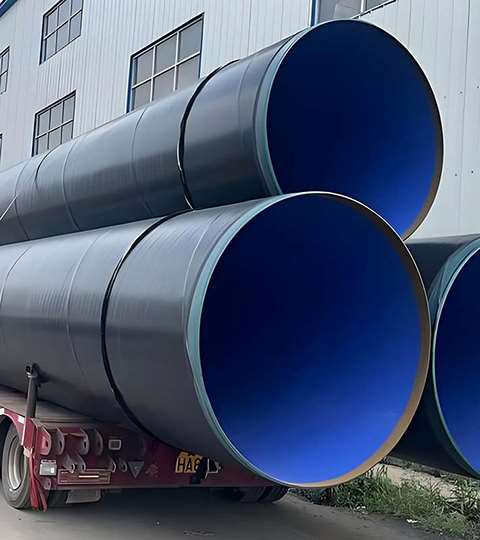
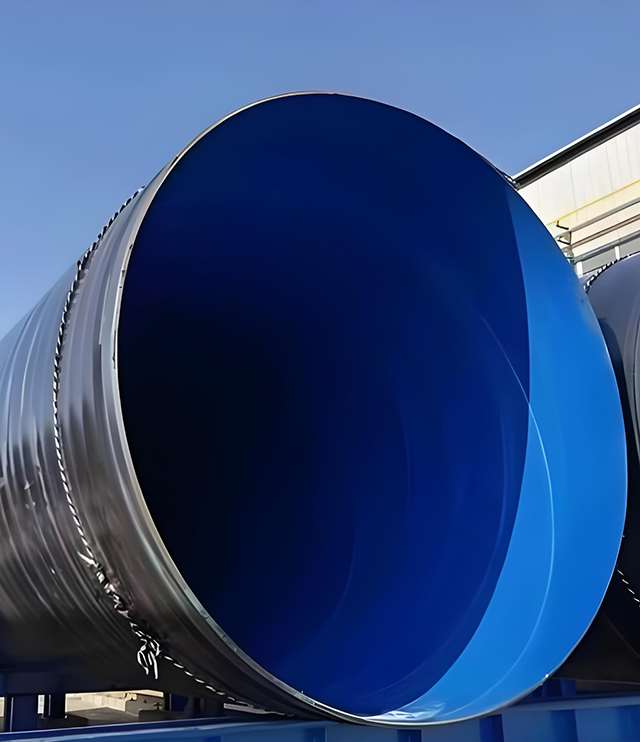
The 3PE coating consists of a fusion-bonded epoxy layer, an adhesive layer, and an outer polyethylene layer. It provides corrosion protection, adhesion, and mechanical protection, making it a widely adopted and proven solution for buried steel pipes.
I. What Are 3PE-Coated SSAW Steel Pipes?
SSAW steel pipes are spiral submerged-arc welded steel pipes, continuously formed and welded from hot-rolled steel coils, making them particularly suitable for manufacturing large-diameter transmission pipelines.
After the steel pipes are manufactured, they undergo 3PE anti-corrosion treatment. The entire anti-corrosion system typically consists of three layers:
- First Layer: Fusion-Bonded Epoxy (FBE)
- This layer adheres directly to the surface of the steel pipe, offering excellent adhesion and corrosion resistance, and serves as the foundation of the entire anti-corrosion system.
- Second Layer: Copolymer Adhesive
- This layer bonds the epoxy layer to the polyethylene layer, ensuring the three-layer structure is firmly bonded and resistant to delamination.
- Third Layer: Polyethylene (PE) Protective Layer
- This is the outermost layer, primarily designed to resist soil pressure, transportation impacts, construction scratches, and moisture penetration.
Because each of the three layers serves a distinct function, the 3PE corrosion protection system is far superior to ordinary paint or single-layer coatings.
II. What Are the Advantages of a Three-Layer Polyethylene Coating?
- Excellent Corrosion Resistance
Underground environments are highly complex, with variations in soil pH, salinity, and moisture content across different regions.
The 3PE anti-corrosion coating effectively isolates the steel pipe from contact with the external environment, significantly reducing the risk of corrosion and thereby extending the pipeline’s service life. - High Resistance to Mechanical Damage
Steel pipes are susceptible to impact during transportation, hoisting, and backfilling.
The outer polyethylene layer possesses good toughness, which helps reduce damage caused by scratches, impacts, and compression from rocks.
This is particularly important for projects with complex construction conditions. - Suitable for Most Buried Engineering Projects
Whether for:
Oil transmission
Natural gas transmission
Urban water supply
Fire protection networks
Industrial water transmission
Long-distance water transmission projects
Three-layer polyethylene-coated SSAW steel pipes provide reliable protection, making them widely used. - Lower Overall Cost
Many procurement personnel focus solely on the purchase price of steel pipes.
In reality, pipelines are long-term assets.
If the quality of the anti-corrosion coating is poor, the costs associated with subsequent maintenance, downtime, and replacement often far exceed the savings realized at the time of purchase.
Therefore, high-quality 3PE steel pipes typically offer better economic performance over their entire lifecycle.
III. For Which Projects Are SSAW Steel Pipes Suitable?
Because spiral-welded steel pipes can be manufactured in larger diameters, they are commonly used in the following projects:
- Long-distance water transmission projects
- Oil and natural gas pipelines
- Municipal water supply main networks
- Sewage pipelines
- Port projects
- Seawater conveyance
- Power plant cooling water systems
For large-diameter conveyance projects, SSAW steel pipes typically offer a significant cost advantage.
IV. What Should Be Considered When Purchasing Three-Layer Polyethylene-Coated SSAW Steel Pipes?
- Compliance with Relevant Standards
In addition to steel pipe standards (such as API 5L, ASTM, GB/T, etc.), you should also verify the standards governing the anti-corrosion coating—such as ISO 21809 or DIN 30670—to ensure that the anti-corrosion performance meets project requirements. - Is the Surface Preparation Adequate?
The quality of the corrosion protection depends largely on the quality of the sandblasting and rust removal process.
If surface preparation is inadequate, delamination issues are likely to occur even with a thick coating. - Are Comprehensive Tests Conducted?
Reputable manufacturers typically perform the following tests:
Coating thickness measurement
Leak detection
Adhesion testing
Peel test
Visual inspection
These tests effectively guarantee the quality of the corrosion-resistant coating. - Are Quality Documents Provided?
It is recommended to require suppliers to provide:
Material Test Certificate (MTC)
Hydrostatic Test Report
Non-Destructive Testing Reports (UT/RT)
Anti-Corrosion Testing Report
Complete quality documentation not only facilitates project acceptance but also aids in subsequent traceability.