
In large-scale pipeline projects such as long-distance oil and gas transmission and high-pressure water conveyance, the selection of pipe materials directly impacts the project’s safety margin, construction timeline, and return on investment.
Large-diameter welded steel pipes play an absolutely pivotal role in long-distance pipelines, and the two major technical approaches frequently compared and discussed are SSAW (spiral submerged arc welded steel pipes) and LSAW (longitudinal submerged arc welded steel pipes).
Faced with long-distance pipelines that often span tens or even hundreds of kilometers, which type of steel pipe is actually more suitable? This article will provide an in-depth comparative analysis from multiple perspectives, including manufacturing processes, structural stress, economic viability, and practical engineering applications.
I. Comparison of Manufacturing Processes and Structural Characteristics
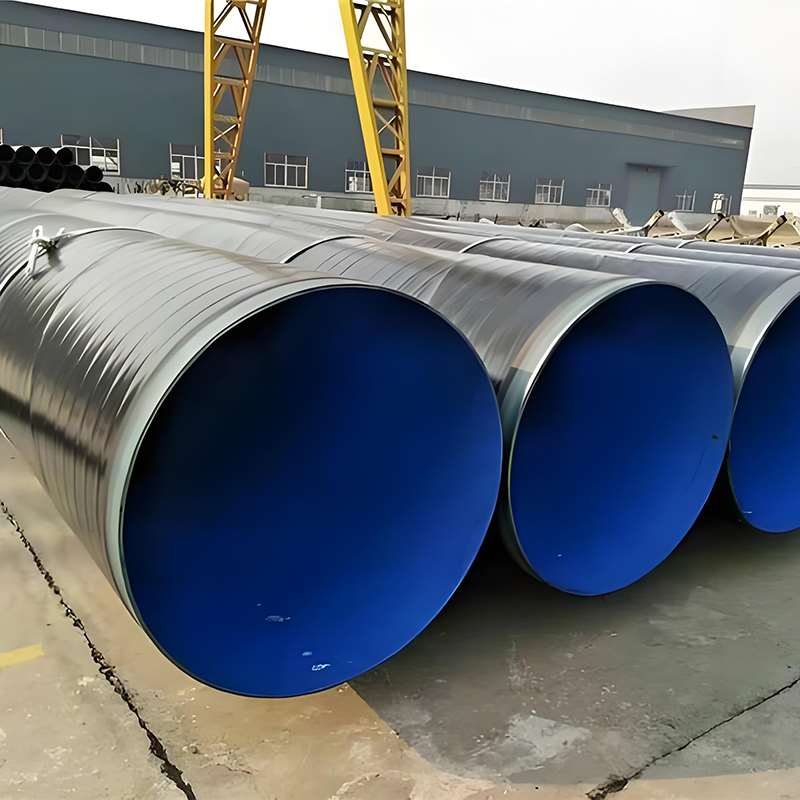
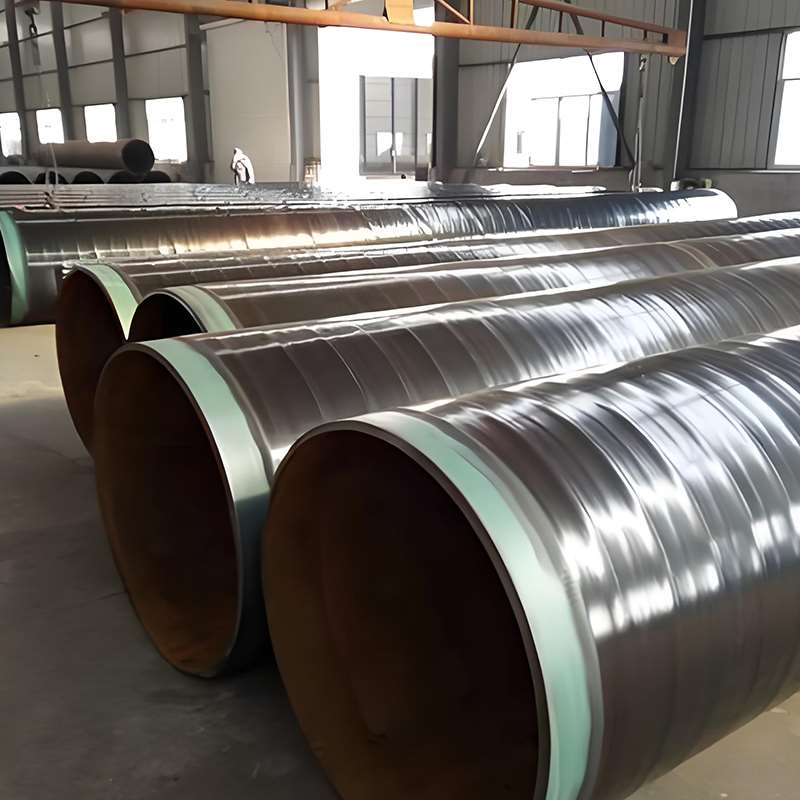
- Manufacturing Principle: A forming machine is used to roll steel strip or coiled sheet into a tubular shell at a specific helix angle, after which the seam is welded.
- Characteristics: Large-diameter steel pipes can be produced using relatively narrow steel strips. Because production is continuous, the pipes are typically longer (12 meters or even longer, depending on transportation requirements), which reduces the number of on-site butt welds required for long-distance construction.
- LSAW Steel Pipes
- Process Principle: Using a single sheet of medium-to-heavy-gauge plate as raw material, the material is pressed into a J-C-O or U-O-E shape in a die or forming machine, followed by double-sided submerged arc welding. It typically undergoes full-length mechanical expansion to eliminate internal stresses and ensure roundness.
- Features: The weld is a straight line, and the weld length is shorter than that of SSAW. Its wall thickness range far exceeds that of SSAW, enabling it to withstand high pressures.
II. Key Performance Comparisons in Long-Distance Pipeline Projects
1. Weld Stress and Safety Margin
During long-distance, high-pressure transportation, pipelines primarily withstand hoop stress generated by internal pressure (i.e., the force that attempts to burst the pipe).
According to mechanical analysis, the hoop stress in a pipeline is twice the axial stress. The weld in LSAW pipes is precisely located along the direction of maximum hoop stress.
In contrast, the weld seam of SSAW steel pipes with anti-corrosion coating forms a certain angle with the pipeline’s axis, and the combined stress it承受s is typically only 60% to 85% of the principal stress. Therefore, under the same operating pressure, the actual stress state of SSAW weld seams is often superior to that of long-seam welded pipes.
2. Geometric Dimensional Accuracy and Construction Efficiency
Long-distance pipelines must traverse mountains and valleys, making on-site welding and butt joining extremely challenging; consequently, the requirements for pipe roundness and straightness are extremely high.
LSAW: After undergoing rigorous mechanical expansion, dimensional tolerances are minimal, the quality of pipe end butt joints is very high, and the speed of on-site butt welding for individual pipes is fast.
LSAW: Early production processes were prone to residual stresses or localized ellipticity exceeding specifications. However, with advancements in modern forming technology, as long as a high-quality pre-precision welding process is selected, the geometric accuracy of modern spiral-welded pipes fully meets the specifications for large-scale transmission projects.
3. Cost-Effectiveness and Supply Chain Capabilities — SSAW’s Traditional Advantages
In pipeline construction projects spanning hundreds of kilometers, material procurement costs often account for the “lion’s share” of the total project cost .
SSAW: Production efficiency is high, and raw materials are easier to source (coil specifications are relatively standardized), resulting in significantly lower overall manufacturing costs compared to LSAW. For pipes of the same specifications, using high-quality coated spiral steel pipes can often save project owners 10% to 25% in pipe costs.
LSAW: The equipment requires a massive investment, forming speeds are slow, and the high cost of thick-plate raw materials leads to relatively high overall construction costs.
III. How Should Decisions Be Made for Long-Distance Projects?
For different types of long-distance projects, the industry generally follows a well-established set of criteria for selection:
| Project Characteristics | Recommended Pipe Type | Key Reasons for Recommendation |
|---|---|---|
| Complex geological conditions and ultra-high-pressure natural gas transmission pipelines (e.g., seismic zones, Class 1 high-pressure gas pipeline areas) | LSAW Pipe | Preferred for thick-wall applications (typically >20 mm). LSAW pipes are widely recognized for their superior reliability in withstanding extreme ground movement and providing excellent tear resistance. |
| Medium- to high-pressure long-distance water transmission and diversion projects (e.g., inter-regional water transfer systems, municipal water trunk pipelines) | SSAW Pipe (Strongly Recommended) | Water transmission systems typically operate at moderate pressures while requiring large diameters. SSAW pipe offers outstanding cost-effectiveness. Combined with factory-applied internal and external coatings (such as 3PE or internal/external fusion-bonded epoxy or plastic lining), it provides long-term corrosion protection while significantly reducing overall infrastructure investment. |
| Conventional onshore oil and gas pipelines across flat terrain (medium to low pressure, large diameter) | Combination of SSAW and LSAW Pipes | Use SSAW pipes for long straight pipeline sections to minimize costs, and switch to LSAW pipes at critical crossings—such as rivers, highways, and railways—to enhance structural integrity and operational safety. |
IV. Conclusion
In long-distance pipeline projects, there is no absolute superiority or inferiority between SSAW and LSAW; rather, the choice depends on the project’s “pressure rating” and “investment budget.”
If your long-distance project involves high-pressure water transmission or oil and gas transportation across gently undulating terrain, the optimal solution—provided that third-party quality inspections are strictly enforced—is to select high-specification spiral-welded steel pipes and ensure they undergo standardized anti-corrosion treatment prior to shipment. This approach strikes the best balance between technical specifications and economic efficiency. However, for extreme high-pressure and high-risk environments, LSAW remains an irreplaceable safety standard.